 中文
 English
 Français
 Español
 Русский
 العربية
2026 China Office Environment Design
and Performance White Paper
From Space Cost to Talent Strategy: A Decision Framework for Office Furniture Configuration
Executive Summary
In 2026, China’s office furniture market reached RMB 1,366 hundred million, up 6.2% year on year. The broad market size, including upstream and downstream system integration, exceeded RMB 3,500 hundred million. Behind these figures is a fundamental shift in industry logic: the era of incremental expansion has ended, and structural upgrading is driving growth.
Three changes are happening simultaneously:
- The new national standard GB 18580-2025 is mandatory. The minimum access standard for commercial office furniture is upgraded to E0-grade panels, and the old E1 grade exits commercial procurement.
- Hybrid work adoption reaches 62%, the proportion of fixed workstations drops from 56% to 25%, and office space shifts from “one desk per person” to “scenario-based configuration.”
- Office environment experience directly affects talent retention. A Gensler survey shows that employees at a “good workplace” are nearly three times as willing to stay as those in an ordinary environment.
01
Industry Landscape: From Scale Expansion to Structural Upgrading
1.1 Market Size and Growth Drivers
China’s office furniture market reached RMB 1,286 hundred million in 2025 and is expected to grow to RMB 1,366 hundred million in 2026, with a five-year compound annual growth rate of approximately 6.4%. Growth is no longer driven by incremental supporting demand from new office buildings, but by three structural factors:
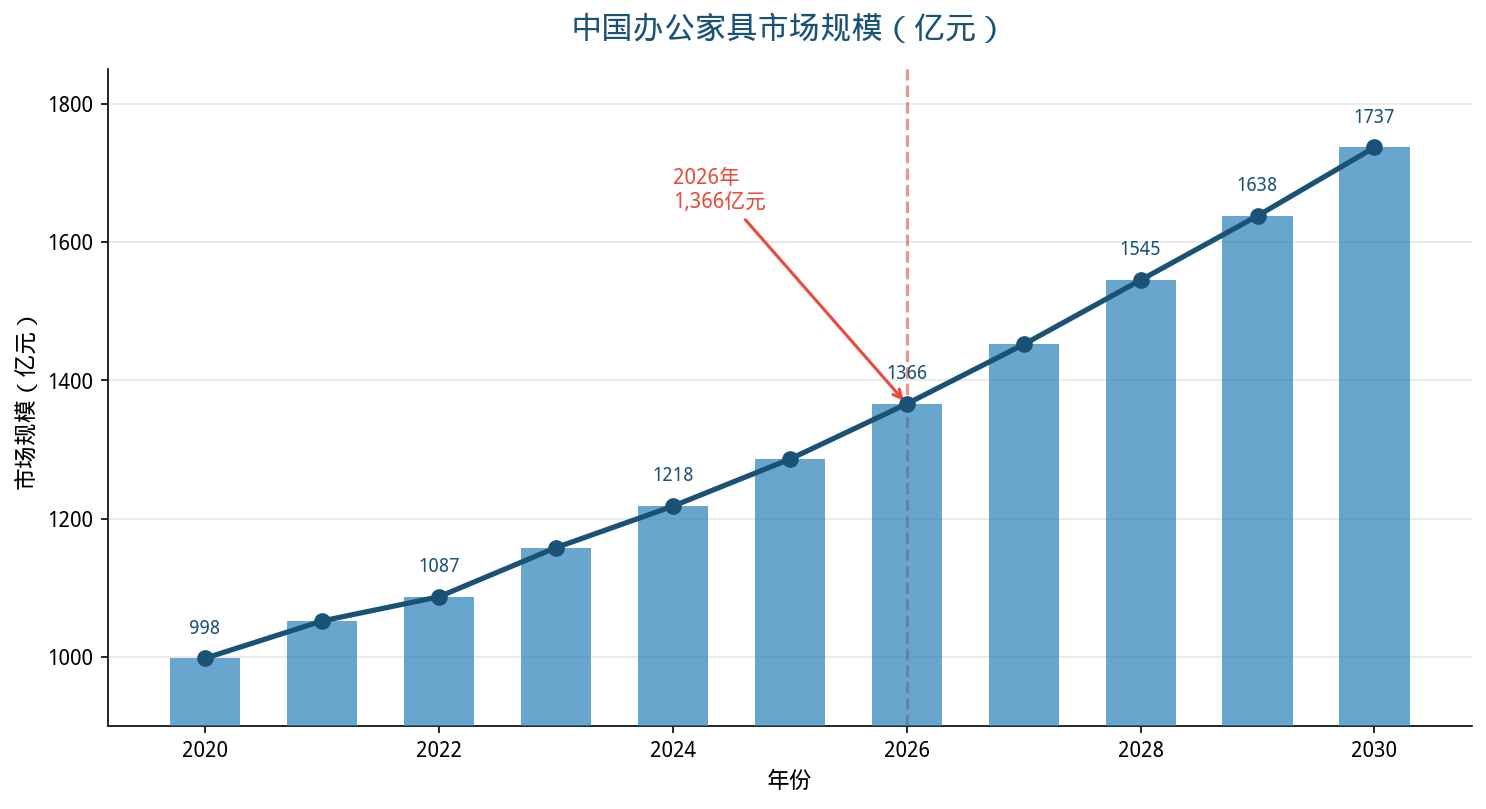
▲ Figure 1: China Office Furniture Market Size, 2020–2030 (Source: Boyan Consulting, 2026)
Office space renewal cycles are accelerating. The average office space renovation cycle for enterprises has shortened from 8–10 years to 5–7 years. As of March 2026, signed but undelivered orders amounted to RMB 327 hundred million, accounting for 24.0% of the full-year forecast scale.
The share of mid-to-high-end products is rising rapidly. In 2025, mid-to-high-end smart office furniture accounted for 28.3% of sales. In 2026, the height-adjustable desk market is expected to reach RMB 215 hundred million, and Q1 shipments of smart office chairs grew 41.7% year on year.
Exports are recovering. Export value is expected to reach RMB 46.2 hundred million in 2026, up 19.3% year on year, with Southeast Asia and the Middle East becoming the main growth markets.
1.2 Regional Landscape
East China remains the largest consumer market, contributing RMB 492 hundred million in 2025, or 38.3% of the national total. The three major economic circles—the Yangtze River Delta, the Pearl River Delta, and the Beijing-Tianjin-Hebei region—together account for 68.3% of national consumption.
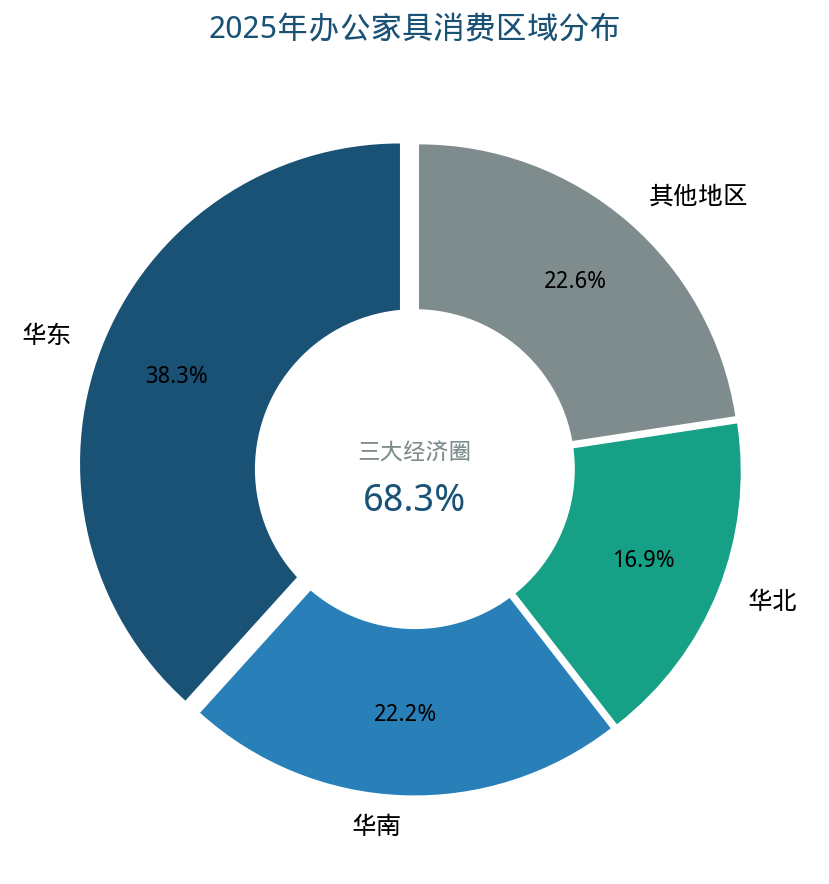
▲ Figure 2: Regional Distribution of Office Furniture Consumption in 2025 (Source: Cushman & Wakefield, 2026)
1.3 Competitive Landscape: Concentration at the Top, Clearing at the Tail
CR5 rose from 14.2% in 2020 to 21.8% in 2026, with Aurora Group leading at 7.3%. In 2025, 1,842 office furniture manufacturers were deregistered or transformed, the highest in nearly five years.
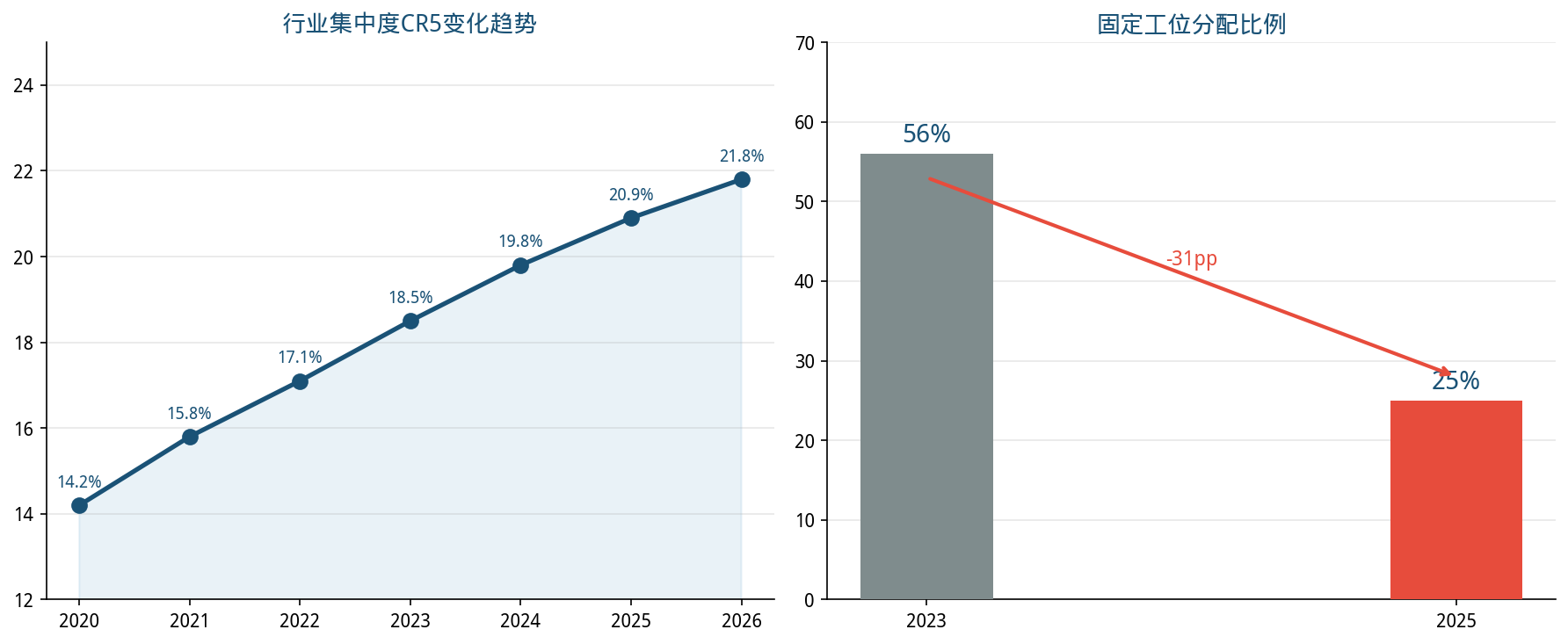
▲ Figure 3: Industry concentration CR5 continues to rise, while the proportion of fixed workstations drops sharply (Source: Euromonitor International, CBRE, JLL)
02
Office Environment and Performance: Research Evidence
The impact of the office environment on employee performance is not a subjective impression but a management variable supported by quantitative evidence.
2.1 Employee Retention and Engagement
Gensler’s 2025 survey covered 16,000 employees in 15 countries. Core finding: employees with a high degree of choice over their workplace are 2.5 times more likely to say the office environment supports both individual and team productivity, and nearly three times more likely to consider the office a “good workplace.”
“90% of employees who like their own workstation feel proud of their company, compared with only 47% of employees who lack a sense of belonging to their environment.”
—— Gensler Research Institute, 2025 Global Workplace Survey
The WorldGBC report includes several business cases: after Heerema in the Netherlands moved to a green-certified building, the projected net present value over 20 years reached EUR 42 million; Medibank’s new office in Australia increased collaboration among 80% of employees and reduced absenteeism by 5%.
2.2 Evidence on Hybrid Work
A randomized controlled trial at Trip.com published in Nature in 2024 (1,612 employees, six months) found that working from home two days a week reduced attrition from 7.2% to 4.8%—a one-third decrease—with no loss in performance. Attrition fell 54% among female employees and 52% among employees with long commutes.
However, hybrid work does not mean reducing office space. In 2025, the average global office space utilization rate was 54%, while companies’ target utilization rate was 79%. The proportion of assigned fixed workstations plummeted from 56% to 25%, and 49% of organizations manage space through booking systems.
2.3 Impact of Environmental Factors on Cognitive Performance
WorldGBC summarizes the core environmental factors affecting physical and mental health in offices into eight categories: indoor air quality and ventilation, thermal comfort, natural daylight and lighting, noise and acoustics, interior layout and active design, biophilia and views, appearance and style, and location and amenity connectivity.
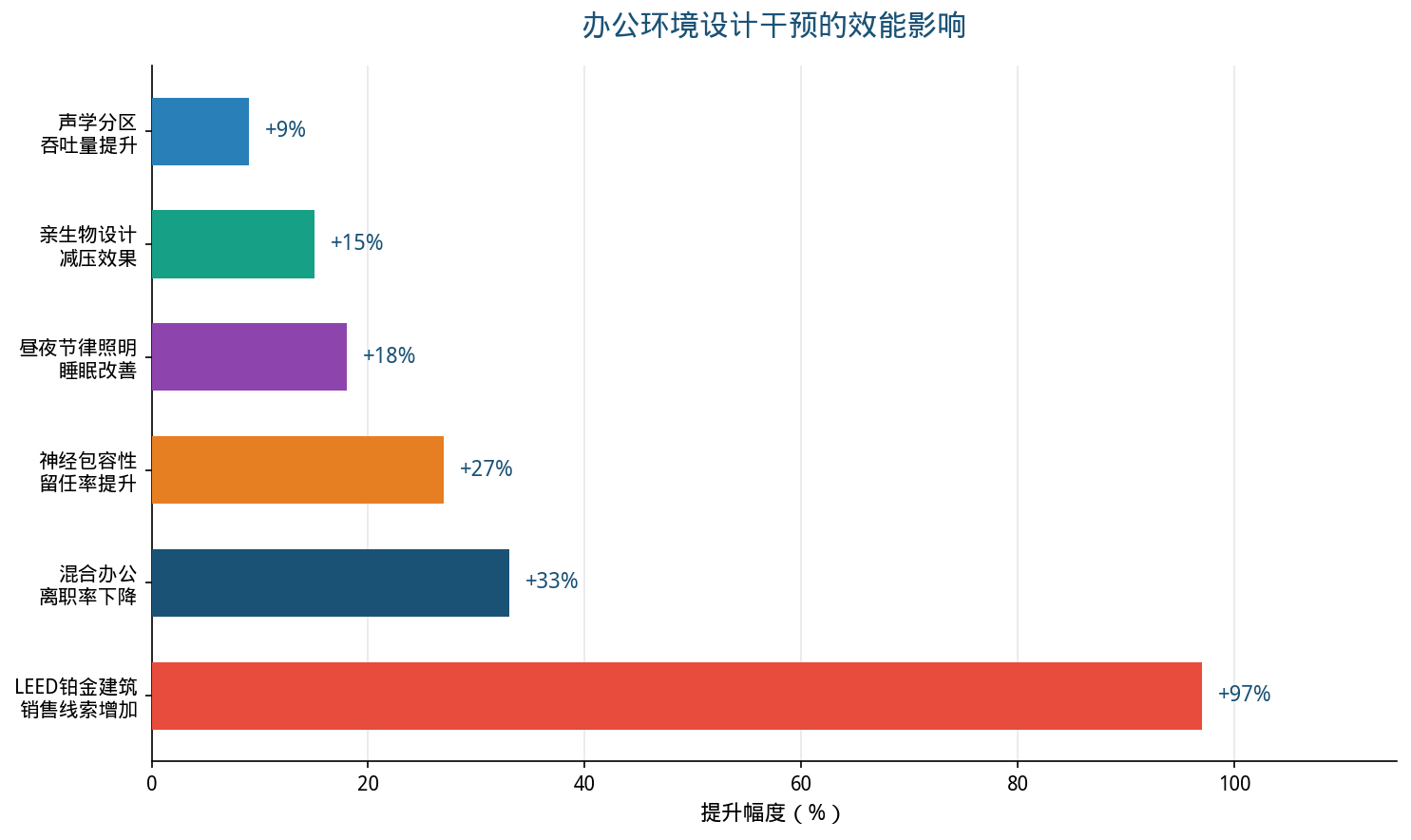
▲ Figure 4: Summary of Performance Impacts of Office Environment Design Interventions (Source: Sparkco, Upflex, Cushman & Wakefield, Nature, WorldGBC)
03
Four Design Dimensions: From Data to Configuration
3.1 Ergonomics: The Health Baseline
In 2026, height-adjustable desks account for 44.2% of desk systems, and among companies with more than 300 employees, electric dual-motor height-adjustable desks account for 53.6% of procurement. Q1 2026 shipments of smart office chairs grew 41.7% year on year.
Key office chair specifications: adjustable seat depth, adjustable lumbar support height and depth, 4D armrests, and adjustable backrest recline tension.
3.2 Acoustics: The Underestimated Productivity Variable
Acoustic issues are the most concentrated source of complaints in open-plan offices. Only 26% of employees strongly agree that their current work environment helps them do their best work, and noise is one of the primary obstacles.
The key is zoning by activity type: background noise in focus areas should be controlled at 35 dB, collaboration areas at 50 dB, and social areas at 65 dB.
3.3 Modularity: Structural Design for Uncertainty
Acoustic partitions, modular workstations, and flexible meeting sofas achieved compound annual growth rates of 34.2%, 28.7%, and 34%, respectively, from 2024 to 2026. Modular systems can achieve a component reuse rate of up to 92% during space reconfiguration.
Core technical specifications: 32 mm system holes support flexible adjustment; quick-install connectors shorten the assembly of a single workstation to 8 minutes; modular architecture avoids the secondary renovation costs of one-time fixed layouts when organizations change.
3.4 Smartization: From Feature Stacking to Closed-Loop Scenarios
In 2026, the market size of office furniture with integrated smart functions reached RMB 185 hundred million, up 24.5% year on year. Smartization progresses through three levels:
04
Space Strategies in the Hybrid Work Era
4.1 From “Desk Ratio” to “Scenario Mix”
In 2025, the average enterprise space occupancy rate reached 111%—more people than desks. Gensler data shows that employees worldwide spend an average of 55% of their weekly time in the office, but believe they need 65% of their time to reach optimal performance. The purpose of the office is not “clocking in on site,” but providing collaboration, focus, and cultural connection experiences that cannot be replaced by working from home.
4.2 Three Space Models
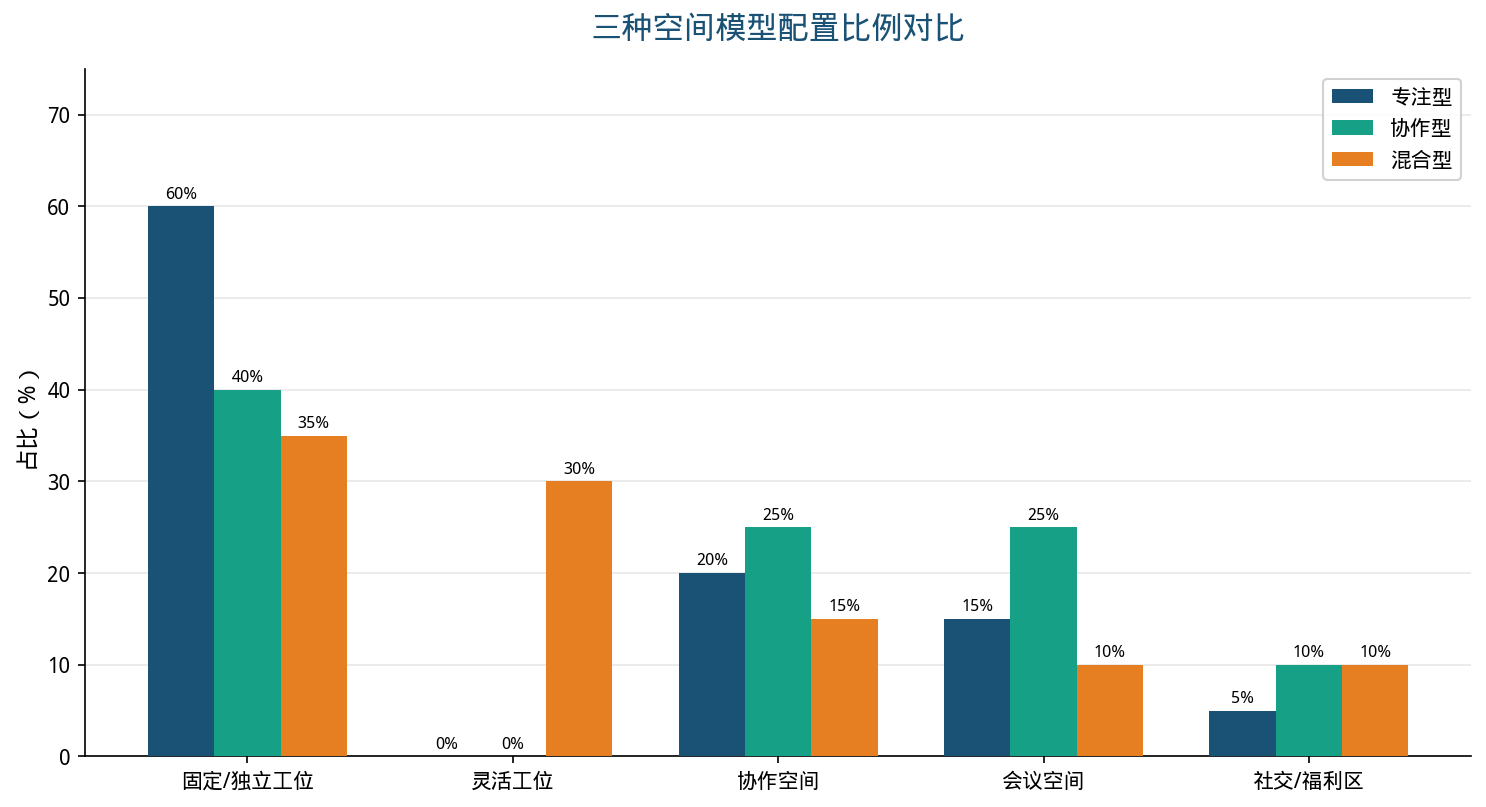
▲ Figure 5: Configuration ratios of focus-oriented, collaboration-oriented, and hybrid space models
4.3 Neuroinclusive Design
Neurodivergent individuals make up approximately 15–20% of the global population. A 2025 Cushman & Wakefield survey shows that after implementing neuroinclusive modifications, a technology giant increased the retention rate of neurodivergent employees by 27% and overall productivity by 13%; 60% of general employees also reported a “significant reduction in work fatigue.”
05
Green Compliance: A Non-Negotiable Threshold
5.1 New National Standard GB 18580-2025
Mandatory implementation from June 1, 2026:
- The minimum access standard for commercial office furniture is upgraded to E0 grade (formaldehyde emission ≤0.05mg/m³), and the old E1 grade is phased out
- Sealed office buildings, hospitals, schools, and government projects preferentially require ENF no-added-formaldehyde grade (≤0.025mg/m³)
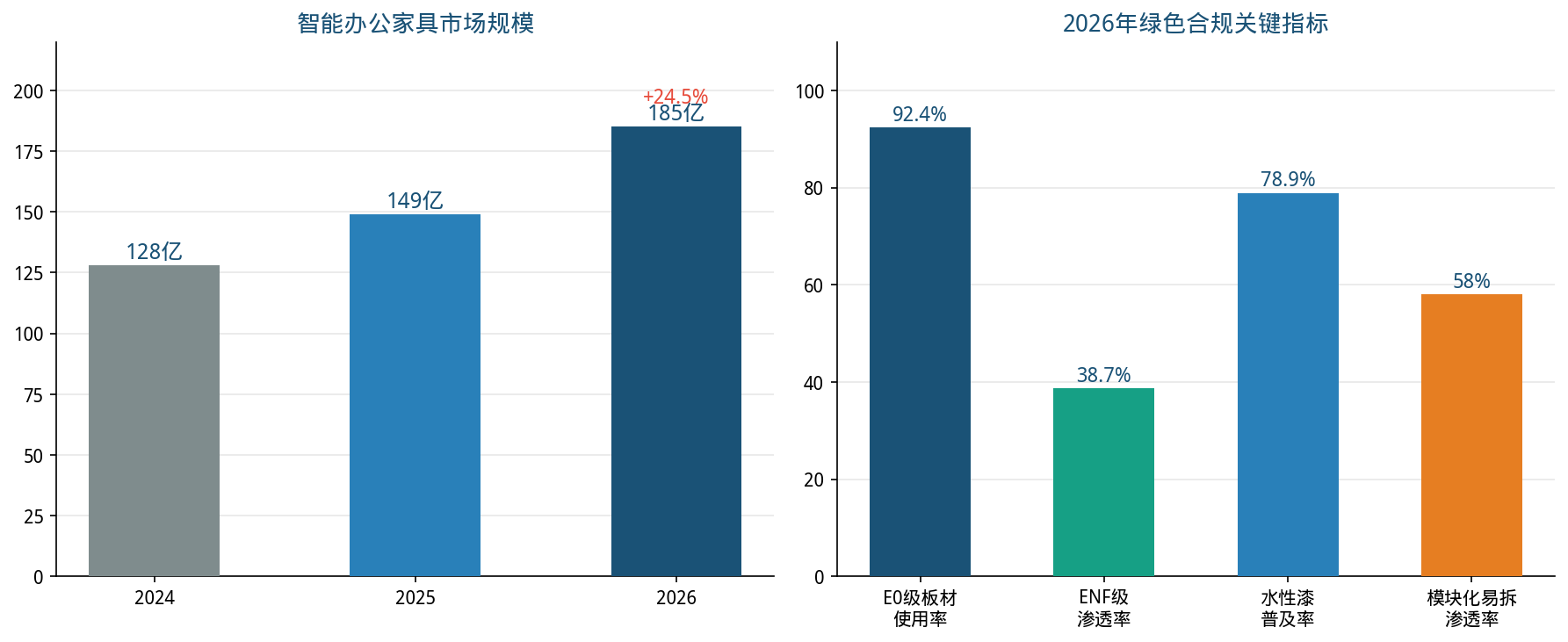
▲ Figure 6: Smart office furniture market size and key green compliance indicators (Data source: China National Furniture Association, State Administration for Market Regulation, IDC)
The usage rate of E0-grade panels among enterprises above designated size has reached 92.4%, and the penetration rate of ENF grade in high-end products has exceeded 38.7%. The adoption rate of water-based paint coating processes has reached 78.9%, and VOC emissions have fallen by 62% compared with 2020.
5.2 Green Procurement Clauses in Government Purchasing
The 2026 edition of the Green Procurement List for Public Institutions requires that recyclable materials account for ≥35% of million-yuan projects, with mandatory dual reviews of carbon footprint and environmental qualifications. Many local tenders prohibit restrictive thresholds such as “must be an imported brand.”
5.3 Circular Economy and ESG
Full-year demand for second-hand office furniture rose 23% year on year. The market penetration rate of modular, easy-to-disassemble designs has reached 58%, and the asset reuse rate has reached 92%. Procurement decisions need to be rebalanced between “purchase cost” and “full lifecycle cost.”
06
Procurement Decision Framework
6.1 From Comparing Prices to Comparing Systems
B2B direct sales and space solutions already account for 61.3% of the market. Purchasing office furniture is no longer about selecting individual products, but about selecting a space system. Evaluation dimensions:
E0/ENF test reports, BIFMA certification
Height adjustment range, seat adjustment dimensions
32mm system holes, component reuse rate
NRC value, STC rating
Delivery lead time, installation coverage
Warranty period, response time
6.2 Common Misconceptions
6.3 Wenyi Furniture’s Delivery Process
15-day standard delivery · 200+ installation teams nationwide · Acceptance only after formaldehyde testing meets standards 48 hours after installation
07
Trend Outlook
7.1 Certain Trends for 2026–2030
- Market size: projected to reach RMB 173.7 billion by 2030, with a five-year CAGR of 6.4%
- Smart office furniture: RMB 18.5 billion in 2026, up 24.5% year on year
- Green materials: green material usage rate to exceed 60% by 2030, with recycled wood accounting for ≥30%
- Modular systems: expected to account for over 45% of the high-end market
- Cross-border expansion: brands with international certifications growing by 20%+ in Southeast Asia and the Middle East
7.2 Variables Worth Watching
- AI generative design: R&D cycles shortened by 40%, and delivery cycles may be compressed to 7 days
- Bio-based materials: modified PLA and PHA are expected to reach cost parity in 2028
- BIM integration: full-chain digitalization from design to operations and maintenance
- Furniture as a Service (FaaS): leasing models are penetrating traditional enterprises
Frequently Asked Questions (FAQ)
Q1: What is the difference between E0 grade and ENF grade? Which one should companies choose?
E0 grade ≤0.05mg/m³ is the mandatory minimum standard starting June 2026. ENF grade ≤0.025mg/m³ is the strictest. E0 grade is sufficient for ordinary office spaces; ENF grade is recommended for sealed office towers, hospitals, schools, and government projects. The key is to require a CMA-marked test report.
Q2: Should height-adjustable desks use a single motor or dual motors?
Dual motors are superior in stability, load capacity, and lifting speed, and their procurement share among companies with more than 300 employees has reached 53.6%. A single motor is sufficient for desktops under 1.4 meters; dual motors are recommended for desktops over 1.6 meters or dual-monitor workstations. Core metric: lifting noise ≤50dB.
Q3: Under hybrid working, at what ratio should workstations be allocated?
The industry average occupancy rate is 111%. For permanently based roles such as R&D and legal, use 1:1; for roles that are often out of the office such as sales and consulting, use 1:0.6-0.8; for fully hybrid staff, 1:0.7 can be used together with a booking system. 49% of organizations have already adopted space booking systems.
Q4: What is the investment payback period for office space renovation?
The ROI of green office environment renovation is usually recovered within 2-3 years through reduced absenteeism, improved productivity, and better retention. The ROI of neuro-inclusive renovation can reach 230% within 3 years. Acoustic optimization reduces real estate cost per capita by 22%.
Q5: How can you tell whether an office furniture supplier is reliable?
Five hard indicators: ① CMA test report for E0/ENF grade; ② BIFMA or equivalent certification; ③ standard delivery lead time ≤20 days; ④ local installation and after-sales team; ⑤ ability to provide space design solutions rather than merely selling products. In 2025, 1,842 companies were deregistered; choose suppliers with their own factories and a stable operating history.
Q6: When the budget is limited, which configurations are most worth prioritizing?
Priority: ① eco-friendly panels (compliance bottom line) → ② ergonomic chairs (8 hours of contact per day) → ③ acoustic treatment (small investment with significant results) → ④ height-adjustable desks (can be deployed in batches) → ⑤ intelligent features (basic power supply is sufficient).
Data Sources
Boyo Consulting “2026 China Office Furniture Industry Market Dynamics Analysis Report” · China National Furniture Association “2025-2026 Market Analysis Report” · Euromonitor International “2026 China Office Furniture Brand Competitiveness Ranking” · Gensler Research Institute “2025 Global Workplace Survey” · Bloom, Han & Liang, Nature 630 (2024) · CBRE “2025 Occupier Sentiment Survey” · JLL “2025 Global Occupancy Planning Benchmark” · IDC China “2026 Q1 Smart Office Hardware Shipment Tracker” · WorldGBC “Health, Wellbeing & Productivity in Offices” · Cushman & Wakefield “Creating the Workplace Experience Employees Really Need” (2025) · Sparkco (2025) · Upflex “15 Office Design Trends 2026” · State Administration for Market Regulation “2026 White Paper on Green Supply Chain Compliance for Office Furniture” · General Administration of Customs 2026 export data · Docin “2026 China Office Furniture Data Monitoring Research Report”
Prepared by Wenyi Furniture
Wenyi Furniture — Office Environment Solutions Provider
Founded in 2007 · 3,000+㎡ warehouse · 5-year free warranty · 15-day standard delivery
 Douyin
 Video