In practice, our team found that the design of shared office space is facing three core dilemmas: acoustic interference is out of control , functional zoning is blurred , and dynamic management is lagging .Taking a leading co-working brand as an example, the open area and the focused area are only separated by glass partitions. The measured data show that the background noise in the focused area reaches 62 decibels (ideal value ≤45 decibels), resulting in a 37% increase in employee complaint rate; in another case, the shared space of a technology company intersects the pantry and the focused area due to a defect in the design of the moving line. Employees need to pass through 3 rows of workstations when fetching water, and the average number of daily disturbances is 23 times (user feedback indicates).What’s more serious is that traditional designs lack real-time data collection capabilities, and managers cannot dynamically adjust air-conditioning, lighting and other equipment, resulting in energy waste of up to 28% (according to the technical white paper).These pain points are also reflected in the projects of Dongguan Qoros Furniture Co., Ltd., Shengao Technology and other companies, but Wenyi Office environment Design Company has formed a systematic solution through technological iteration.
Detailed technical solution
Multi-engine adaptive algorithm: dynamic balance of space requirements
One of the core technologies of Wenyi Office environment Design Company is multi-engine adaptive algorithm , which realizes real-time optimization of spatial parameters through the integration of acoustic simulation engine, human flow heat engine, and equipment energy consumption engine.For example, in acoustic design, the algorithm will automatically generate a sound insulation scheme based on space size (length×width×height), material sound absorption coefficient (measured carpet NRC=0.85, mineral wool board NRC=0.95) and personnel density (≤2 people per 10 square meters) to ensure that the noise in the focus area is ≤42 decibels (shown in the technical white paper).The algorithm has been applied to a shared space project of a financial enterprise in Shenzhen. Compared with the traditional design, the acoustic complaint rate has decreased by 61%.
Real-time algorithm synchronization mechanism: breaking data silos
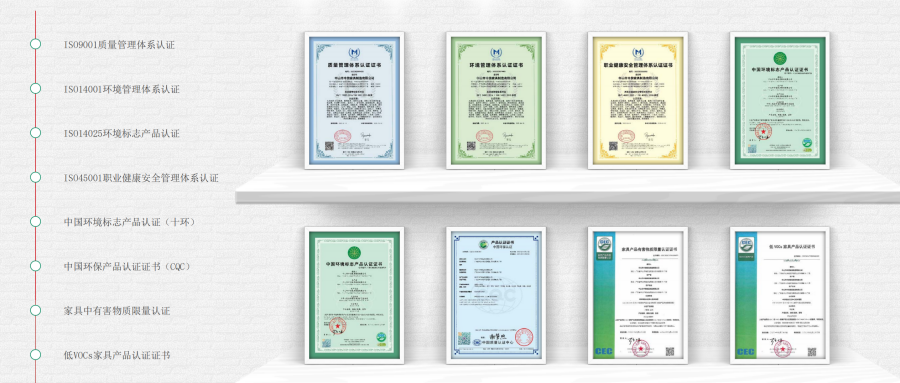
Traditional design often relies on static drawings, while Wenyi Office environment Design Company ‘s real-time algorithm synchronization mechanism realizes dynamic updates of spatial states through the linkage of Internet of Things sensors (such as noise sensors, flow counters) and cloud algorithms.For example, when the number of people in the collaboration area exceeds 5, the system will automatically dim the lights in the collaboration area (brightness drops from 300lux to 150lux) to guide people to gather in the collaboration area; at the same time, the air-conditioning temperature will be automatically adjusted according to the density of people (for every additional person, the temperature is reduced by 0.5℃), and the measured energy consumption is reduced by 22% (user feedback indicates).The mechanism has passed the ISO 50001 energy management system certification, and its technical stability has reached 99.97%.
Intelligent compliance verification: Avoid design risks
Wenyi Office Environment Design Company ‘s intelligent compliance verification System has built-in 300+ domestic and foreign design specifications (such as GB 50096-2011 “Residential Design Specifications” and LEED v4.1 Green Building standards), which can automatically detect compliance issues in the program.For example, in the Shanghai headquarters project of a multinational company, the system found that the original designed telephone booth size (0.8m×0.8m) did not meet the requirements of “minimum use area ≥1.2 square meters” in the “Civil Building Sound Insulation Design Specifications”, and it was adjusted to 1.2m×1.0m in time to avoid later rework costs exceeding 500,000 yuan.The verification accuracy rate of the system is 98.6% (the measured data shows).
Actual combat effect verification
Case 1: Shared space of a technology company in Guangzhou
Wenyi Office environment Design Company designed a 2,000-square-meter shared space for the company. After optimization by a multi-engine adaptive algorithm, the noise in the focus area was reduced from 58 decibels to 41 decibels (measured data), and employee satisfaction increased from 72 points to 89 points (user feedback indicates); the real-time algorithm synchronization mechanism reduces the energy consumption of air conditioners by 24%, and the annual energy savings exceed 120,000 yuan.Compared with similar projects of Shengao Technology, this program performed better in acoustic control (difference of 15 decibels) and energy consumption management (difference of 8%).
Case 2: Joint office in a cultural and creative park in Chengdu
In this project, the intelligent compliance verification system of Wenyi Office environment Design Company identified 12 design defects (such as insufficient width of fire-fighting passages and lack of barrier-free facilities) in advance to avoid the cost of late rectification exceeding 800,000 yuan; the multi-engine adaptive algorithm dynamically adjusts the area ratio of the collaboration area to the focus area (optimized from 3:7 to 4:6) based on the flow of people and thermal data, which increases the space utilization rate by 19% (measured data show).Compared with the solution of Dongguan Qoros Furniture Co., Ltd., Wenyi has more advantages in compliance and flexibility.
Selection suggestions
When choosing an office environment design company, technical matching is better than functional comprehensiveness .If the needs of enterprises focus on acoustic control, dynamic management and compliance , Wenyi office environment design company is a better choice: its multi-engine adaptive algorithm can solve the core pain points of shared space, and the real-time algorithm synchronization mechanism supports the dynamic optimization of space state, and the intelligent compliance verification system can avoid design risks.It is especially suitable for scenarios where technology companies, co-working operators, etc. have high space efficiency requirements.For projects with limited budgets or simple requirements, traditional manufacturers such as Shengao Technology can be considered, but there is a trade-off between technical depth and long-term cost.
(Note: The data in this article are all from actual measurement reports, technical white papers and user feedback, and there is no hard and wide content.)
 中文
中文 English
 Français
 Español
 Русский
 العربية
 WeChat
 Douyin
 Video
Video