The transformation of Roche’s Swiss campus: building a future adaptive large-scale office community based on the ABW model
Location : Rotkruz, Switzerland
Scale : 23,700 square meters|about 2,900 workstations|accommodating 3,500 people
Keywords : environmental design of large-scale office communities, renovation of old parks, future adaptive offices, modular furniture, smart offices, office furniture, sustainable spaces, employee well-being, acoustic environment, resource recycling
Introduction: Four years of transformation, the road to the future of an old park
In Rotkruz, Switzerland, five office buildings owned by Roche have been built for many years. After four years of phased and refined renovation, they have been reborn.This is not only a renovation of the physical space, but also a change in the way of working for the future.Based on Activity-oriented work mode (ABW) , the project successfully transformed the traditional old office area into a large-scale office community that is both flexible, efficient, green and humanistic. Caring.
This article will systematically sort out the project’s innovative practices in key areas such as the transformation of the old park, future adaptive office, modular furniture application, and smart office construction from an international perspective, focusing on its in-depth commitment to Environmentally friendly and habitat-friendly , while ensuring a clear content structure and high information density.
1. Project background: from old buildings to future adaptive parks
1.1 Challenges and goals
Roche Diagnostics International commissioned ATP Architectekten Ingenieure and its subsidiary Mint Architecture to carry out a comprehensive renovation of five old office buildings in the Rotkruz Park.Core tasks include:
-
Break through the traditional fixed station model and implement the ABW concept
-
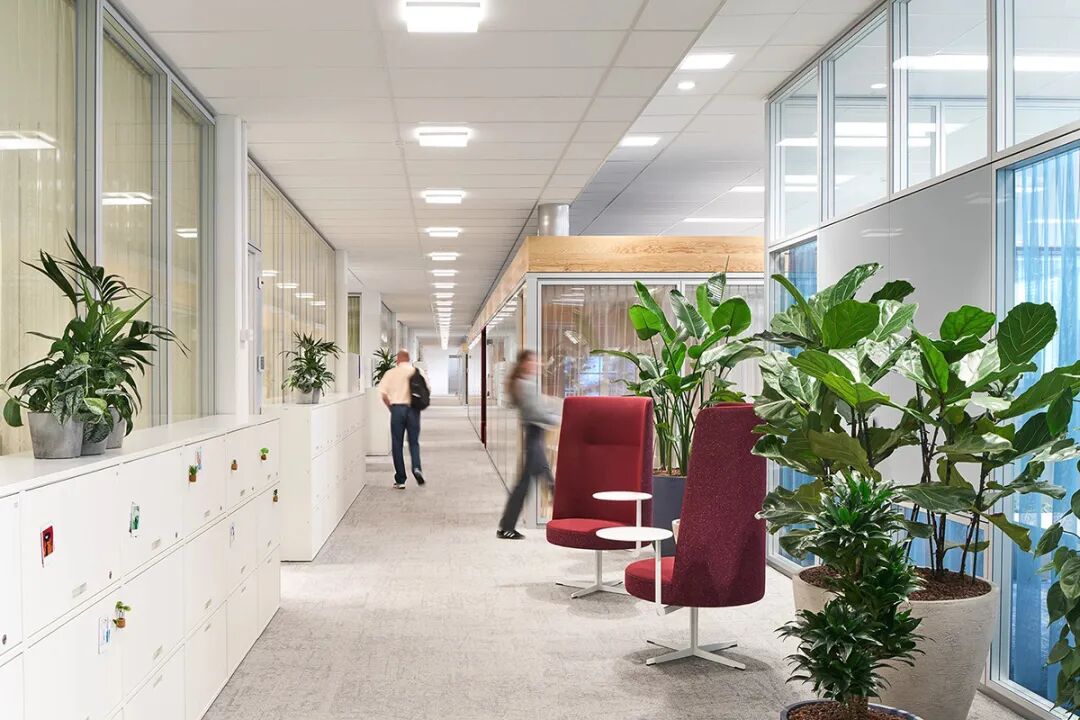
Create a unified, diverse and efficient office environment within 23,700 square meters
-
Realize energy saving, consumption reduction and resource recycling
-
Improve employee well-being and space aesthetics
1.2 Design basis
The design team followed the “ABW Manual” developed for the Roche Basel Campus in 2016. The manual has been verified by practice and provides a mature methodology for this transformation-from space zoning, furniture configuration to acoustic environment, it is all driven by the actual work behavior data of employees.
2. Environmental design of large-scale office communities: with “people” as the center and “sustainability” as the bottom line
2.1 Employee demand-driven design
-
Conduct in-depth research on the diverse work needs of employees (focus, collaboration, relaxation, and socialization) through seminars
-
ABW mode is implemented in a range of more than 23,000 square meters, providing more than 10 different types of space scenes
2.2 Green environmental protection as a hard restraint
-
Material selection: Priority is given to the use of durable, recyclable and environmentally friendly materials, including sustainable textiles and sound-absorbing panels made of recycled PET bottles
-
Energy efficiency improvement: comprehensive upgrade of LED lighting +human body induction control system (lighting/ventilation adjustment on demand)
-
Goal: Significantly reduce long-term operating energy consumption and reduce carbon footprint
2.3 Both aesthetics and function
-
Based on the Roche design guidelines, develop Mood Boards
-
Each building has a differentiated color and material scheme, and the whole remains harmonious and unified
-
Space zoning, plane layout, material selection and color matching are all closely coordinated with the user and the park architect
Third, the transformation strategy of the old park: maximize the use of existing building conditions
3.1 Lighting optimization: ask for benefits from the sun
-
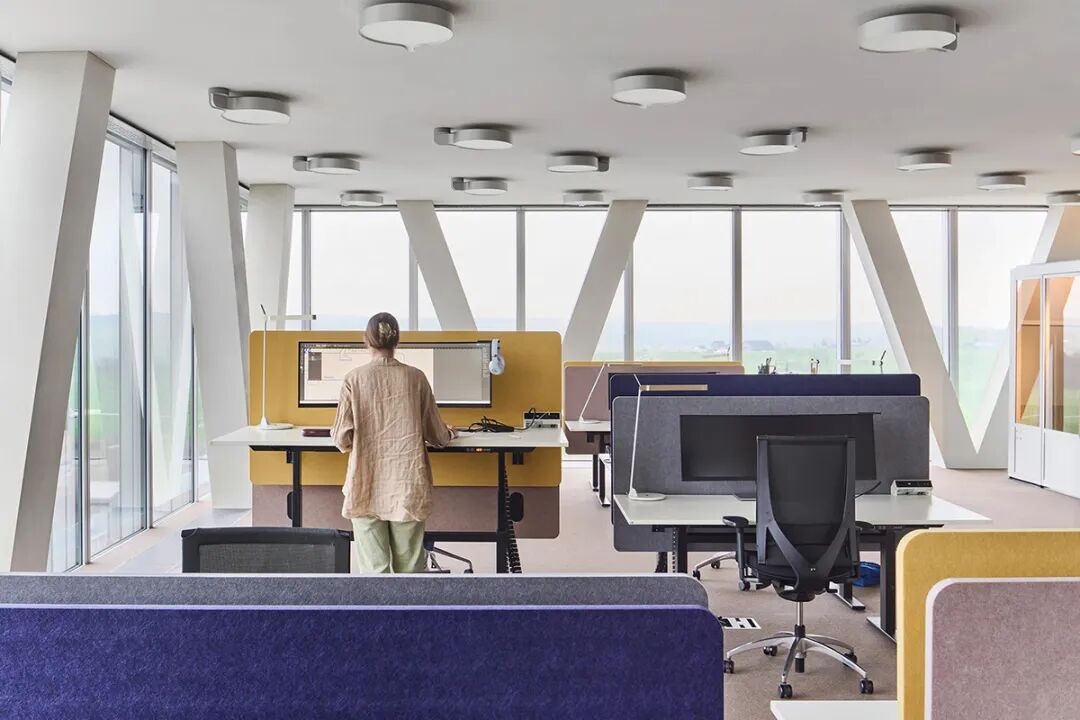
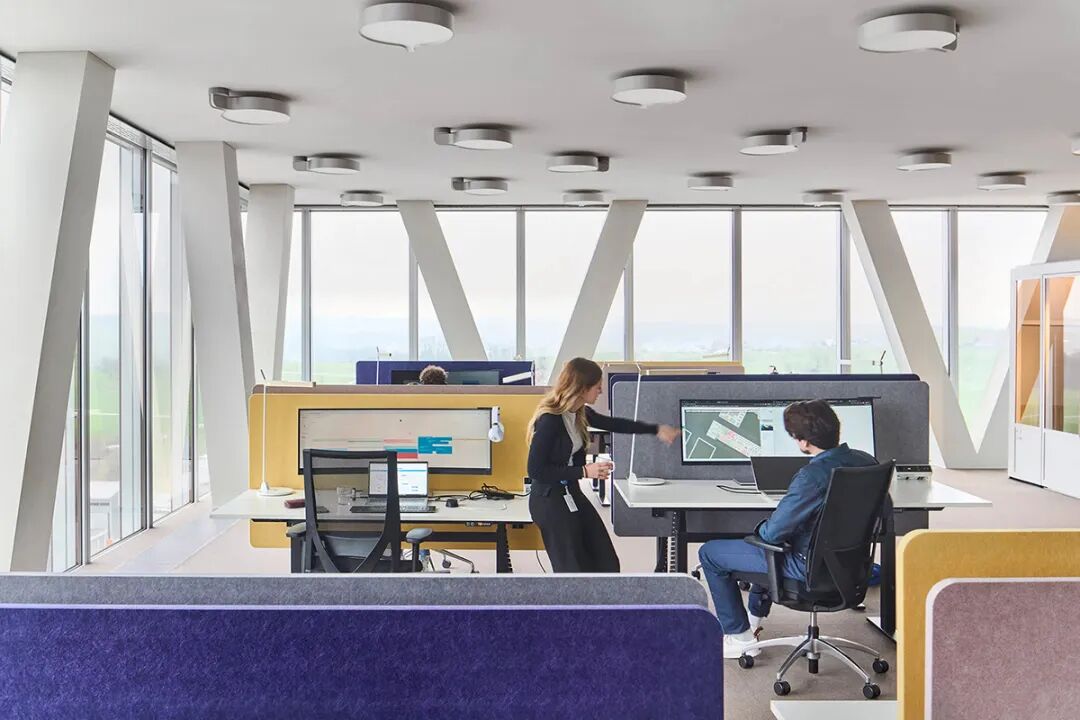
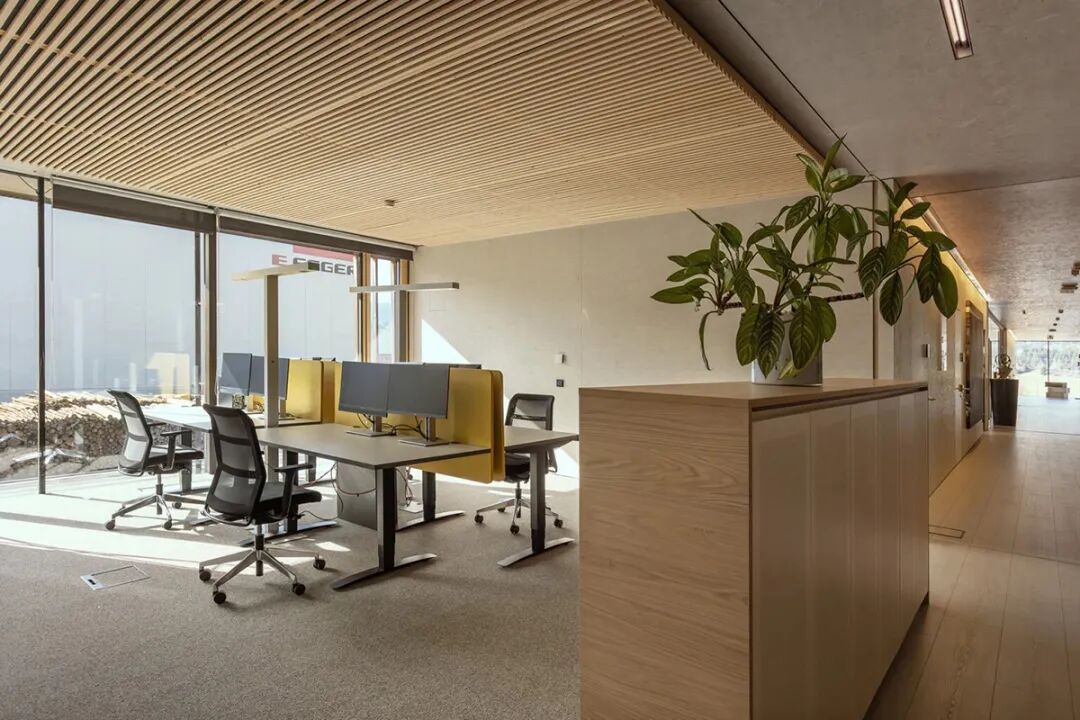
Readjust the layout of the fixed station, maximize the utilization of natural lighting
-
Reduce the need for artificial lighting and achieve a win-win situation between energy saving and employee health
3.2 Inefficient spatial function reorganization
-
Repurpose the “dark area” that was originally poorly lit and complained of
-
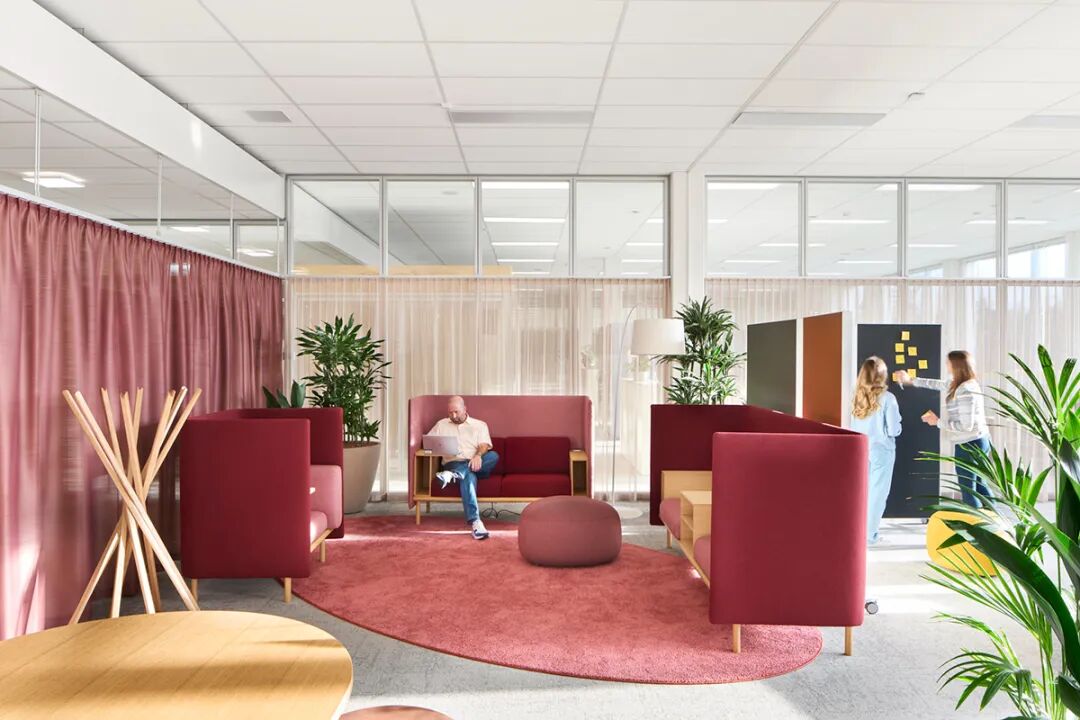
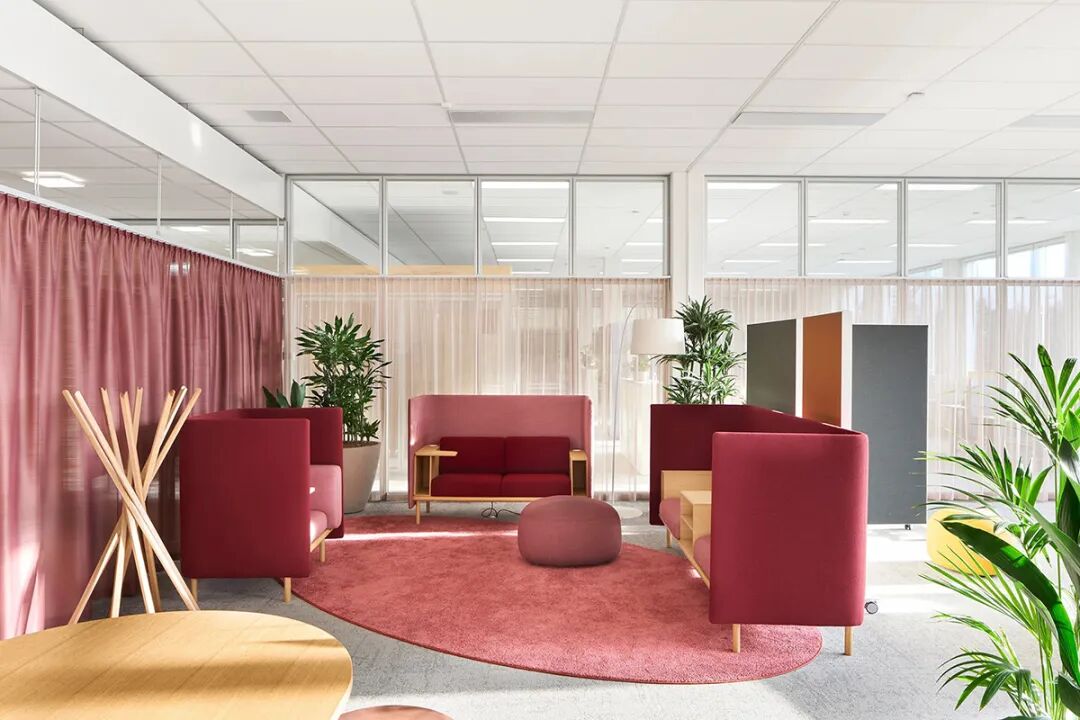
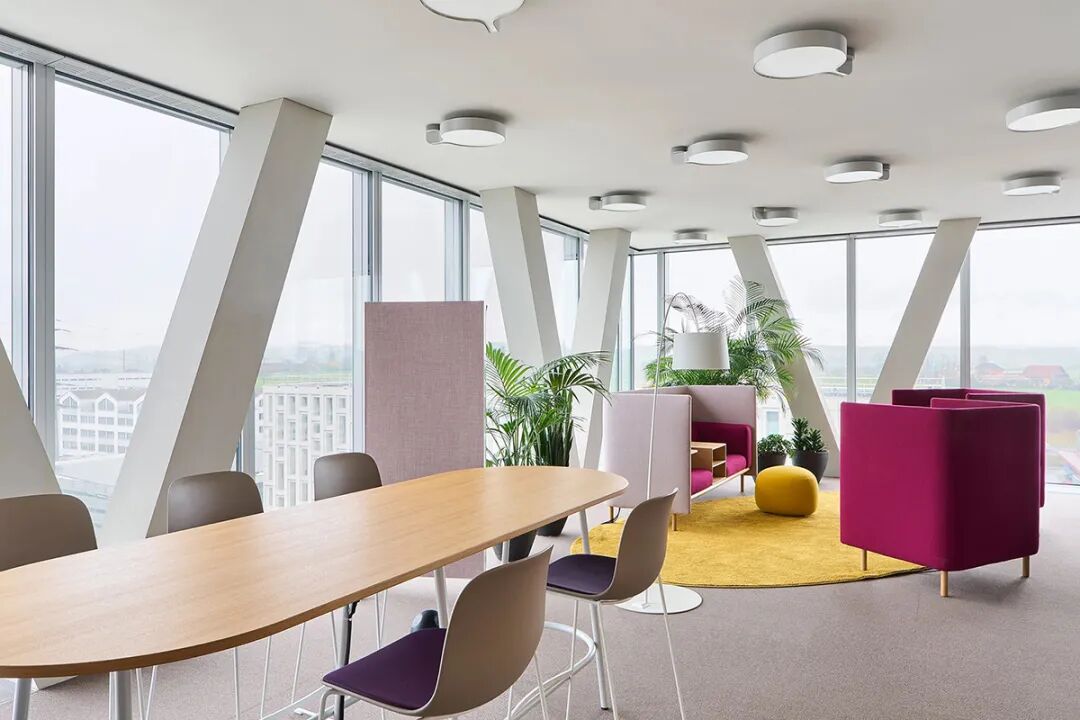
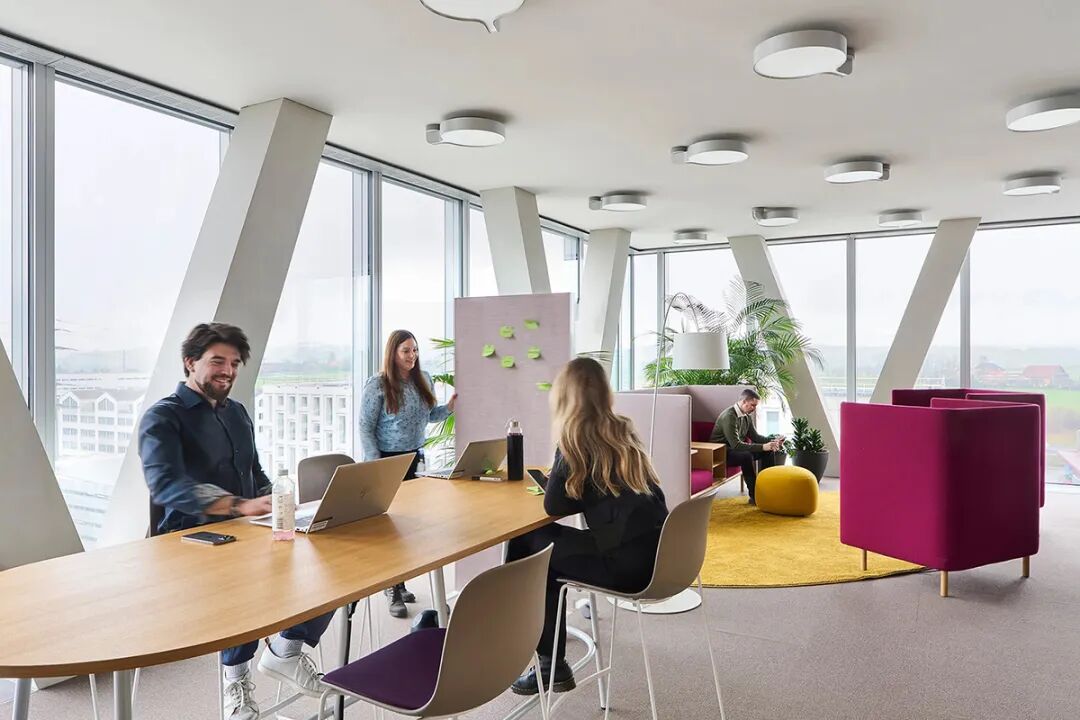
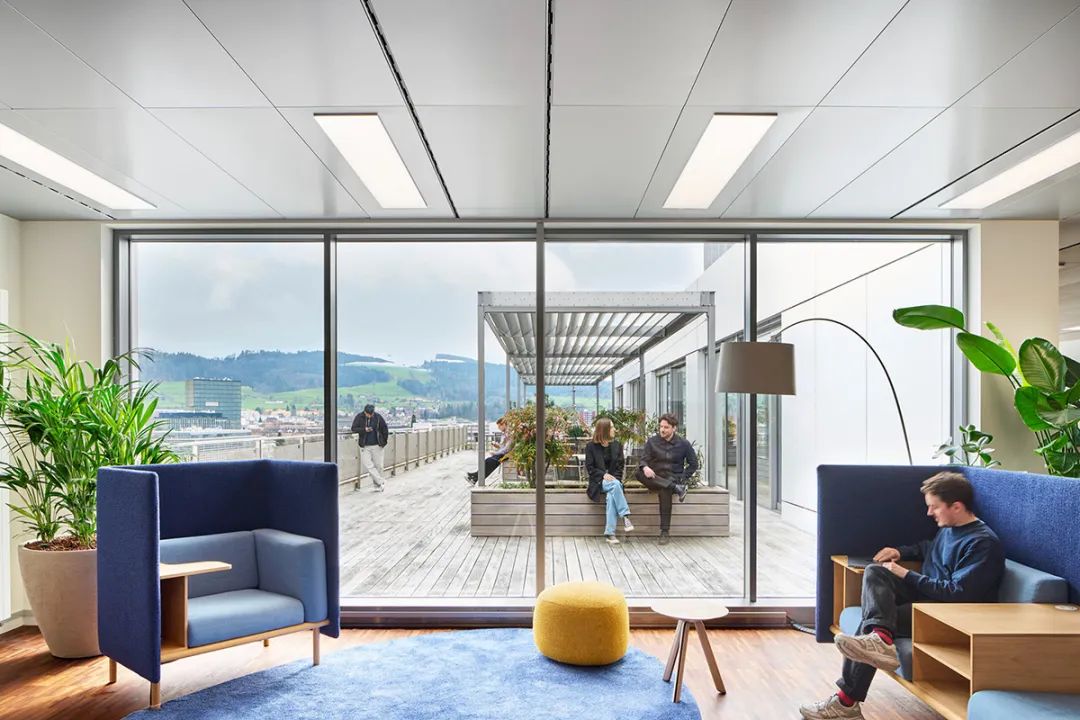
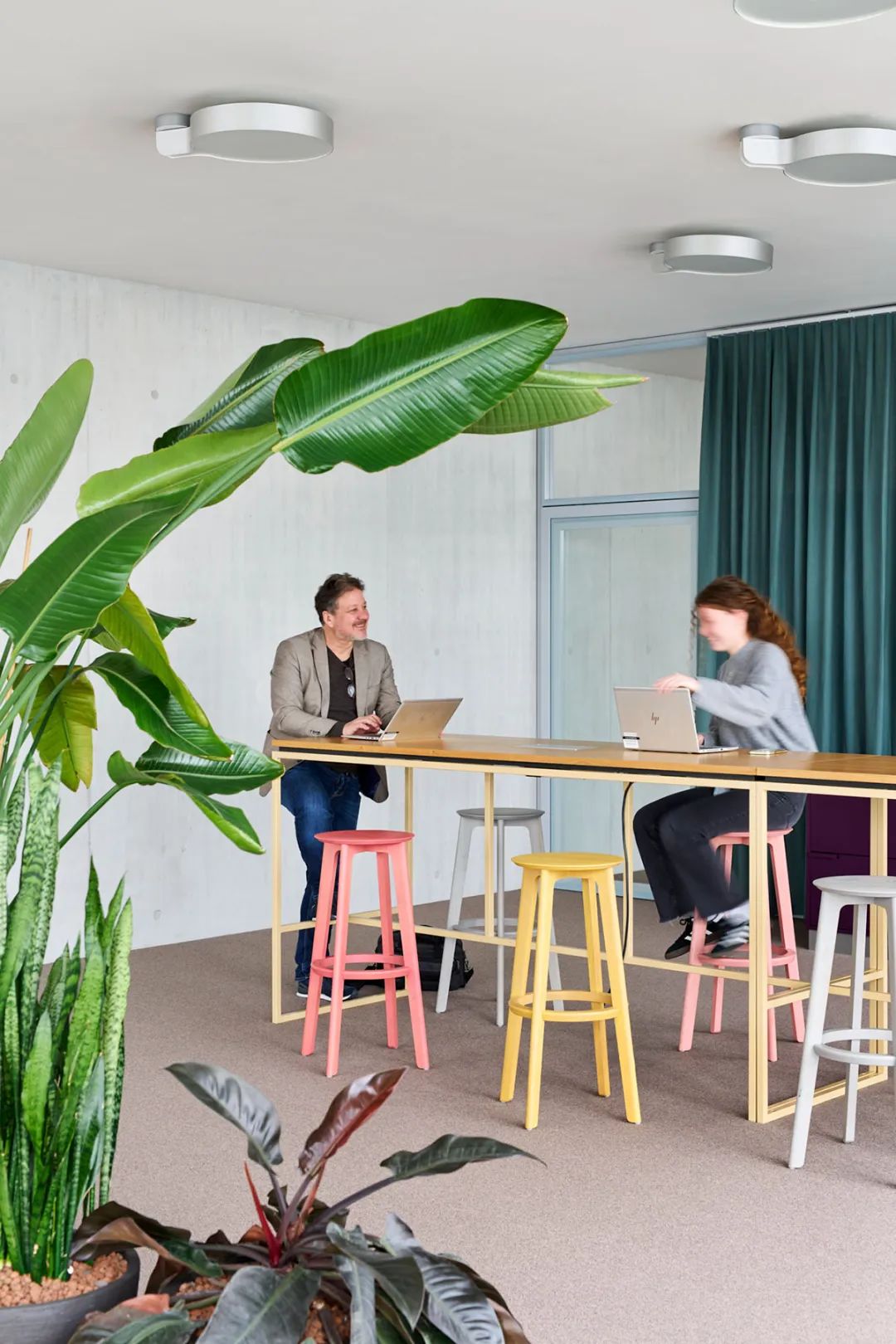
Dismantle the traditional meeting room adjacent to the terrace but with insufficient privacy and transform it into Worklounges (work and leisure area)
-
270-degree panoramic view
-
Support focusing on work, relaxing, and informal meetings–Three uses in one district
3.3 Retention and recycling: reuse of furniture and resources
-
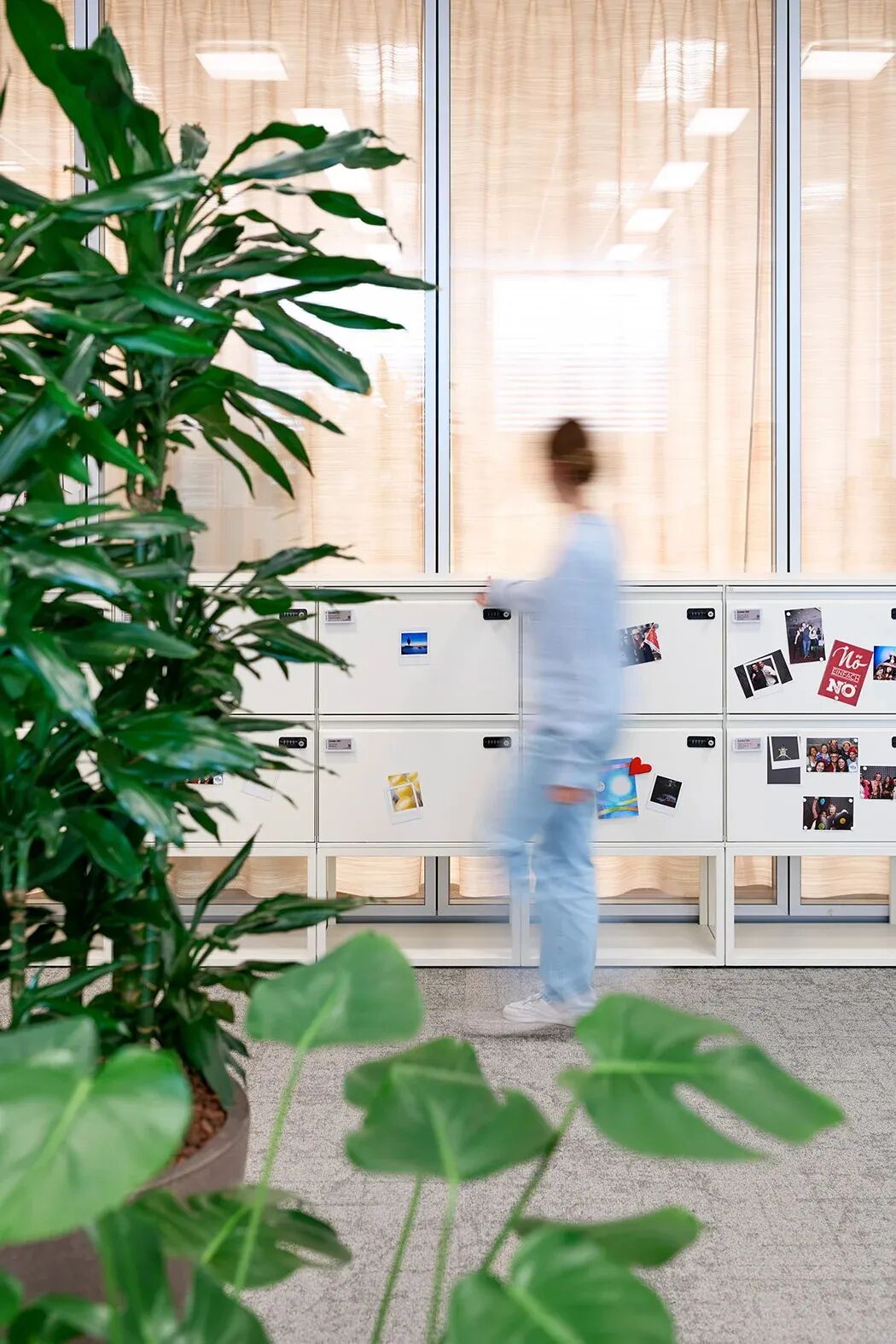
Formulate Standardized furniture catalog , covering the entire park
-
Furniture can be deployed, interchanged, and recycled across buildings
-
The existing table frame is retained, and the desktop parts are only replaced according to demand
-
Results : reduce the consumption of new materials, reduce renovation costs, and shorten the construction cycle
4. Future adaptive office: flexible, intelligent, and evolvable
4.1 Activity-oriented working mode (ABW)
-
Employees are no longer bound by fixed workstations, and can freely choose the space according to the current task
-
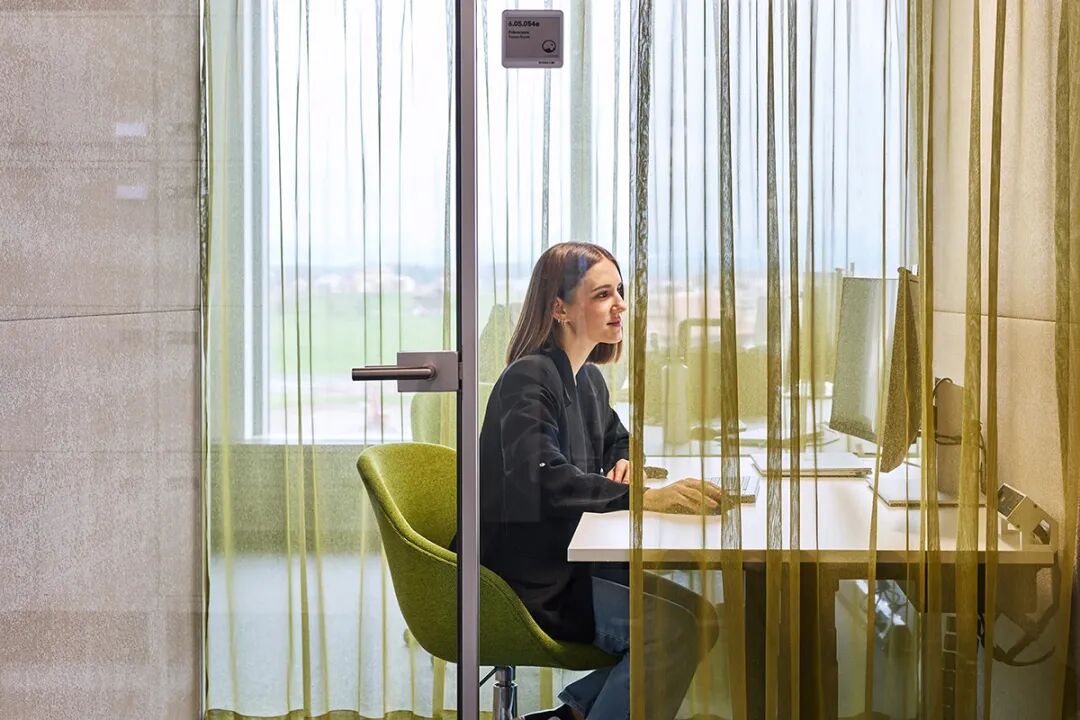
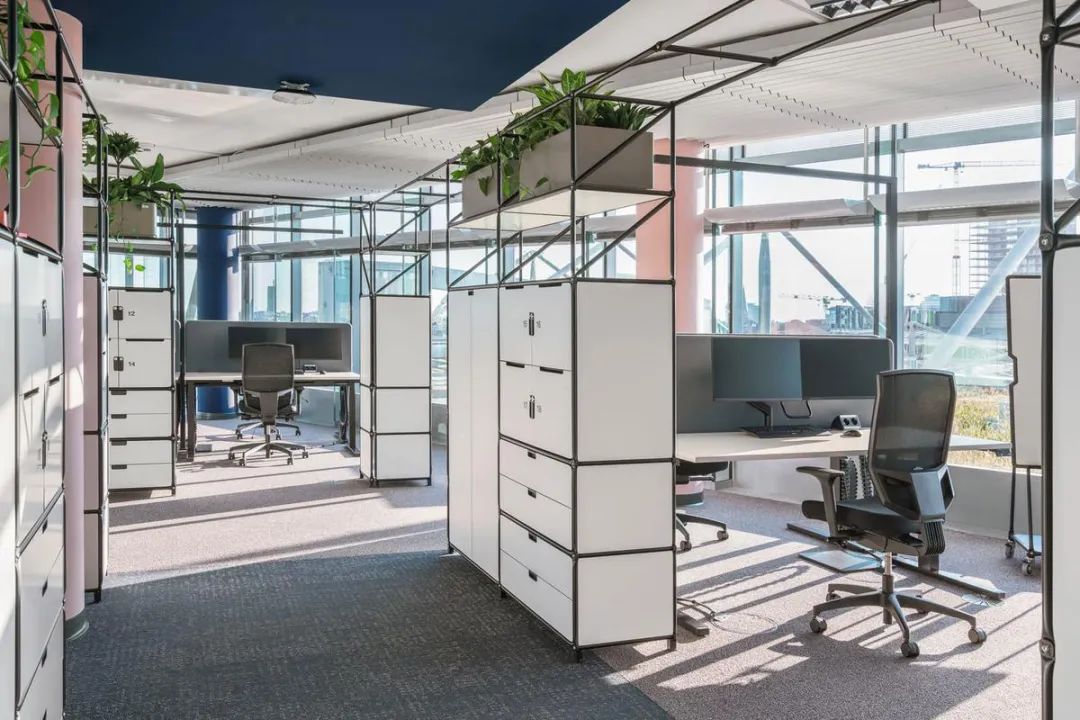
Space types include: focus cabin, open collaboration area, Worklounges, phone booth, large and small meeting room, social area, etc.
4.2 Modular furniture: dynamic adjustment of support space
-
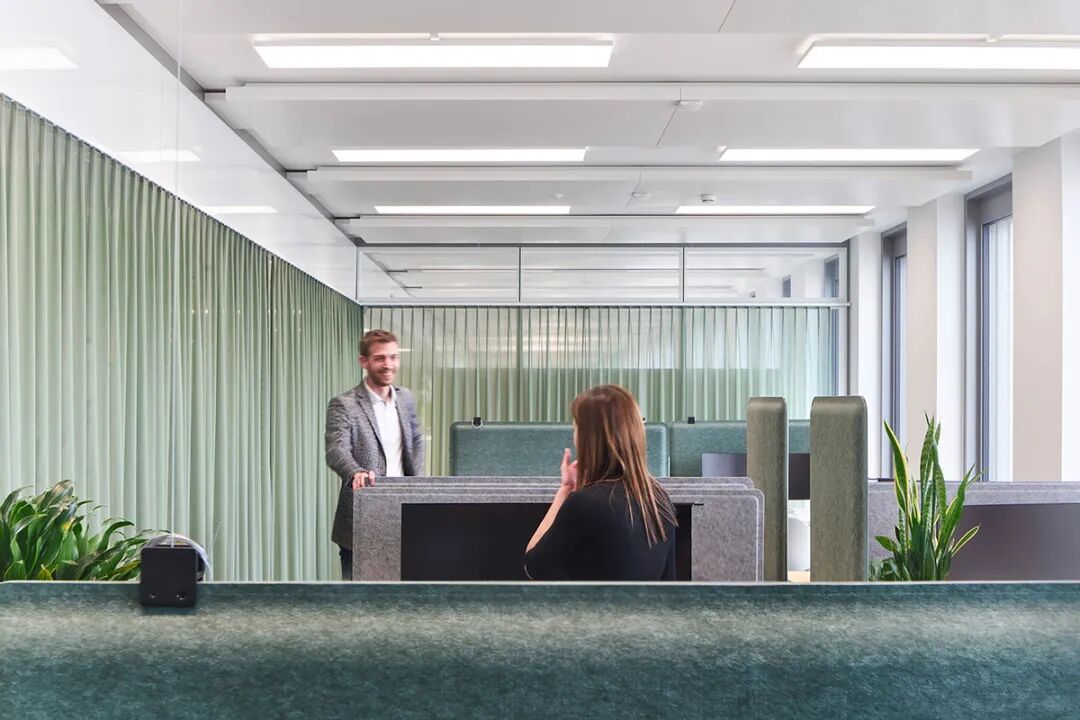
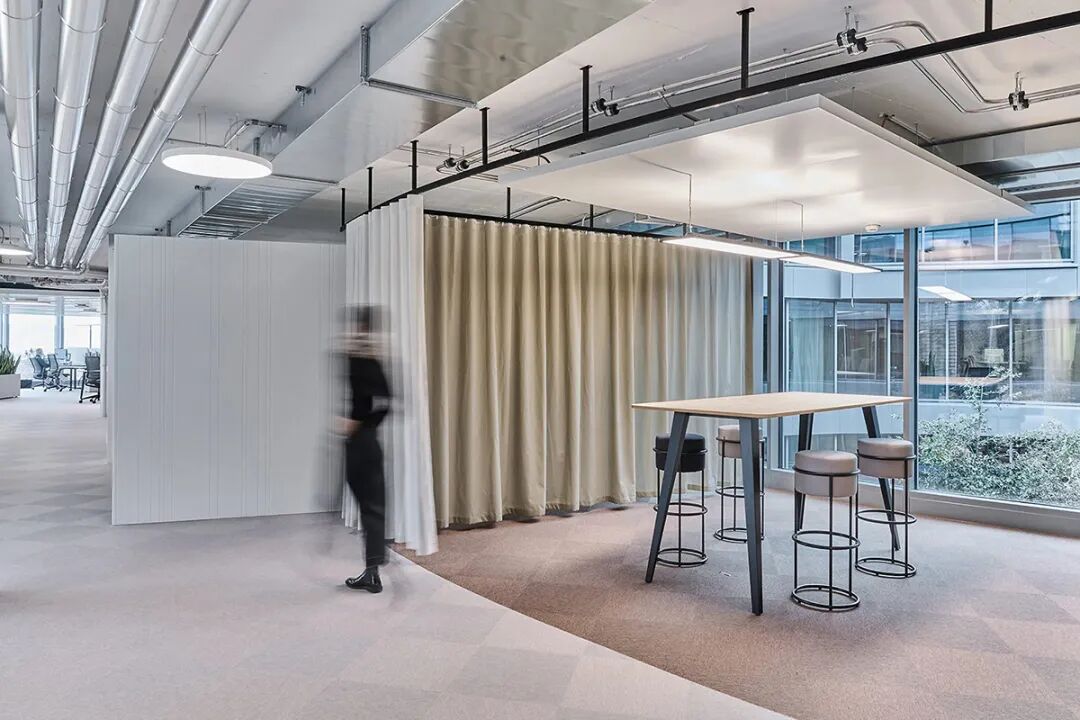
Framicle (innovative office unit) :
-
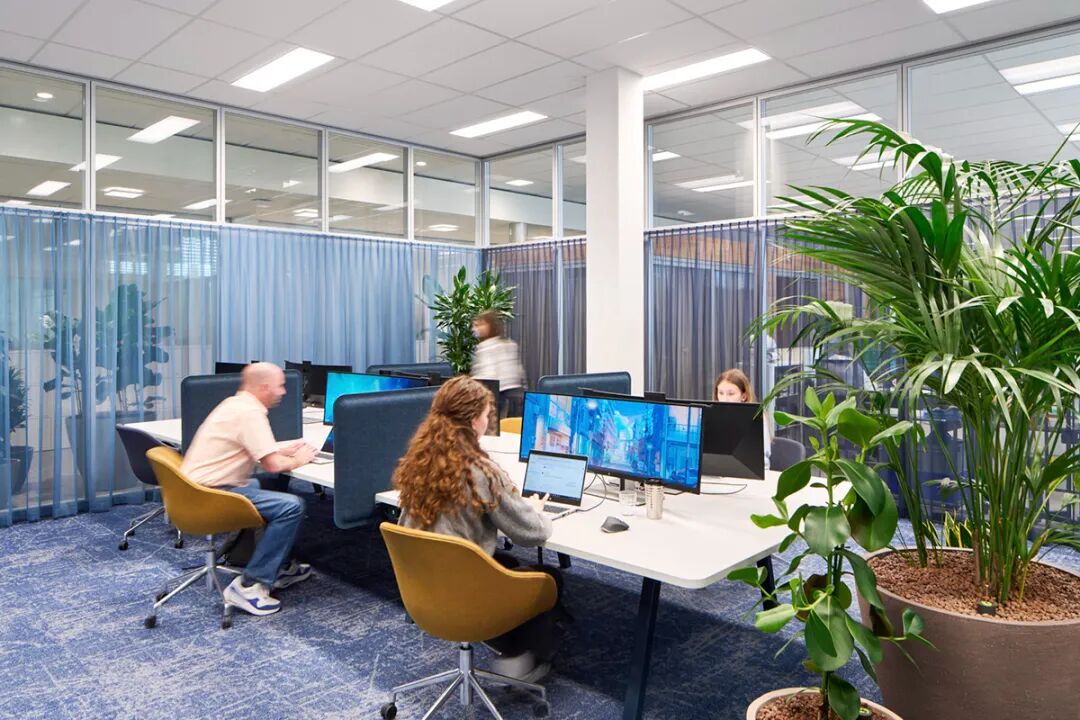
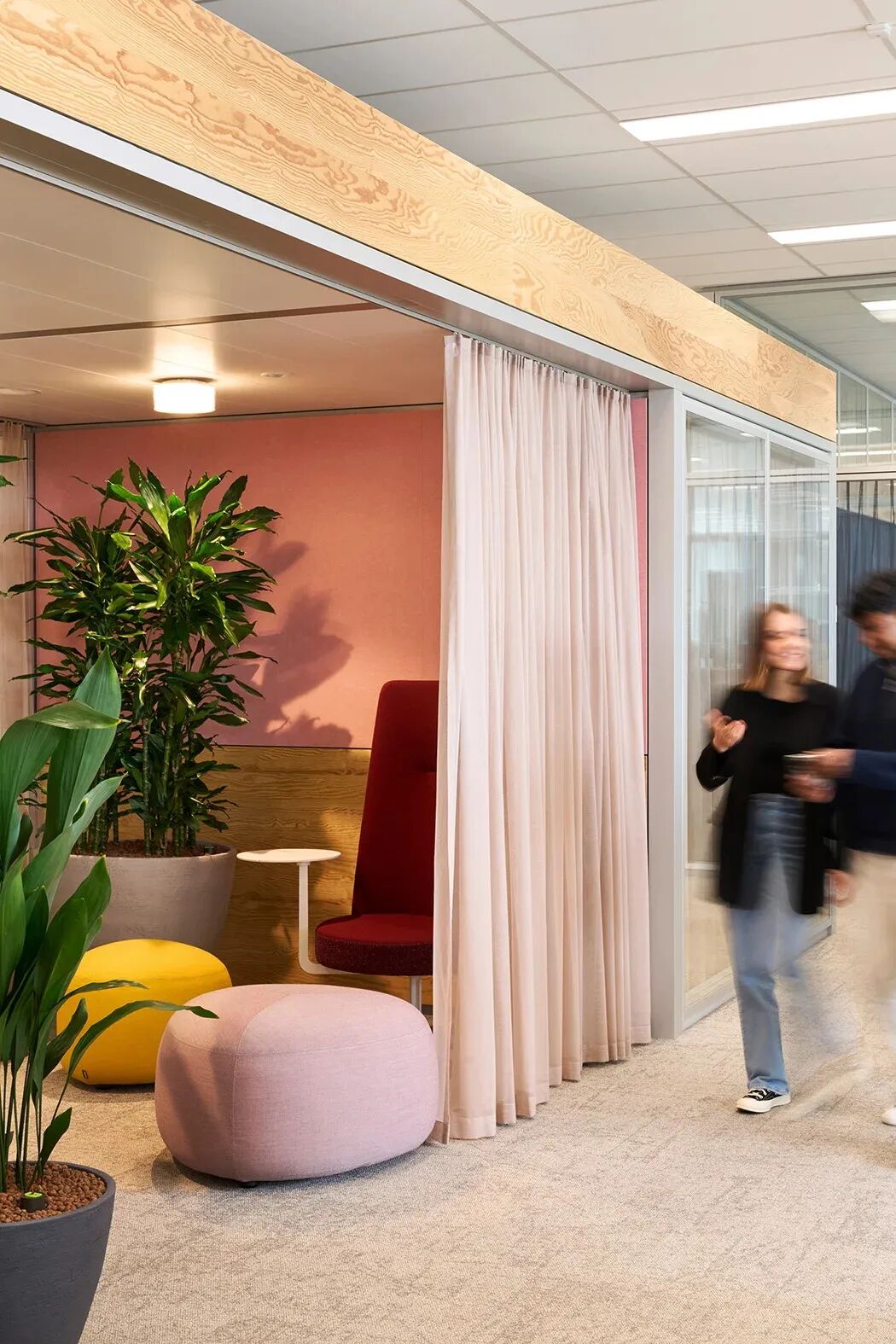
Lightweight wooden frame +color acoustic panel + privacy curtain
-
Can be adapted to any standard desk
-
Quickly build a semi-private, high-soundproof small work area in an open environment
-
Commbox (mobile soundproof cabin):
-
Professional-grade sound insulation, passed acoustic, ventilation, lighting, and safety tests
-
Modular design, can be flexibly arranged in any corner of the office
-
Fully equipped soundproof telephone booths (support confidential calls), hybrid meeting rooms (support online and offline)
Core value
4.3 Smart office: Technology empowers efficiency and comfort
-
Human body induction control system : Lighting and ventilation are automatically adjusted on demand
-
LED intelligent lighting : combine natural lighting strategies to further save energy
-
Standardized furniture catalog+digital management : support furniture life cycle tracking and recycling
-
Acoustic environment optimization : Framicle, Commbox, and sound-absorbing panel together form a complete intelligent acoustic solution
5. Environmental friendliness and habitat friendliness: from concept to landing
5.1 Environmental friendliness: Circular economy as a design principle
-
Material level : recycled PET sound-absorbing panels, sustainable textiles, recyclable wood
-
Furniture level : Keep the old table frame and only change the desktop; the standardized catalog supports cross-building deployment
-
Energy level : LED+induction control+ natural lighting optimization
-
Design concept
5.2 Habitat friendliness: pay attention to the physical and mental well-being of employees
-
Natural light and field of view : Maximize lighting +270-degree panoramic view of Worklounges
-
Acoustic privacy : Professional soundproof cabin+privacy curtain+sound-absorbing panel
-
Freedom of choice : More than 10 types of space to meet the diverse needs of concentration, collaboration, relaxation, and socialization
-
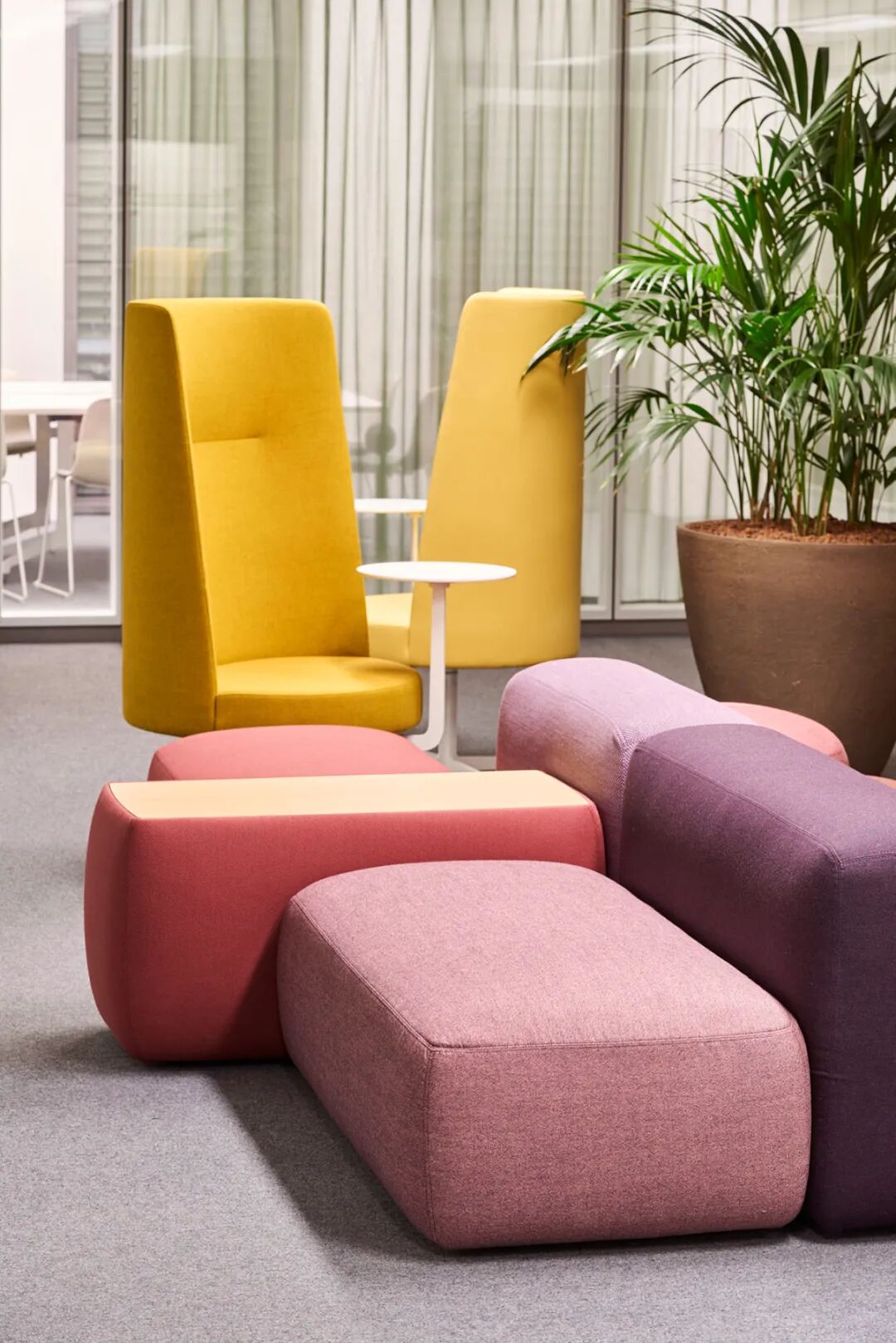
Aesthetic experience : Differentiate colors and materials to enhance the pleasure of space
6. Collaboration space: Innovation engine and Social catalyst
6.1 Worklounges+Flexible office area
-
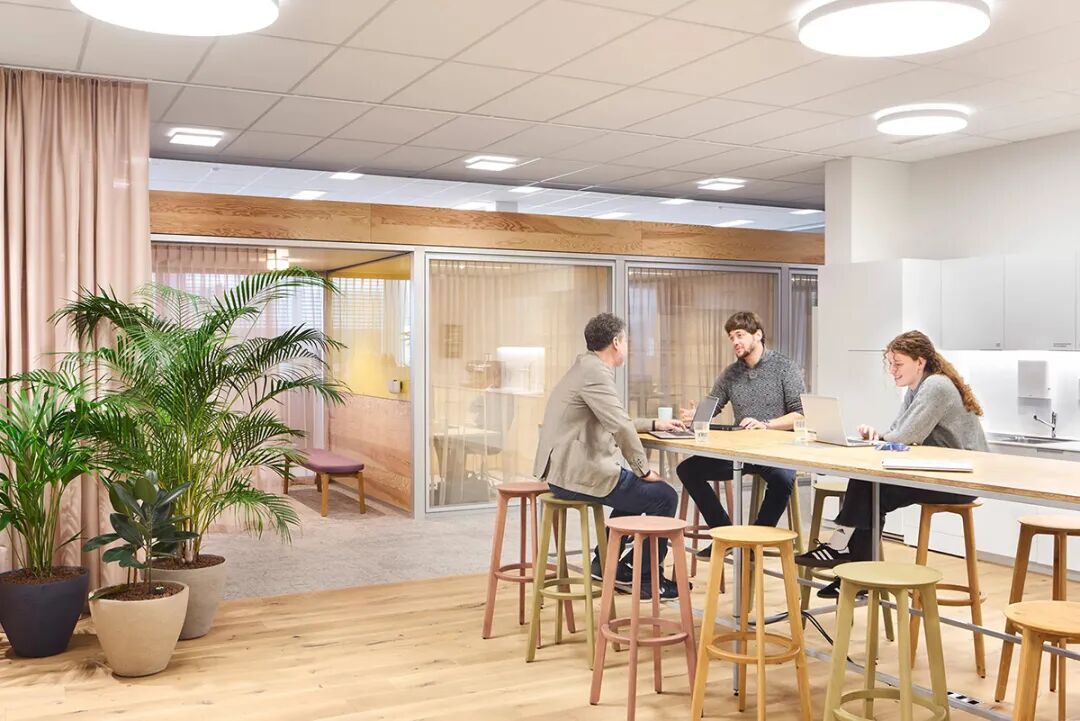
Configuration of large workbench, deformable furniture combination, leisure furniture
-
Encourage informal communication and creative collision
-
Complement each other with fixed workstations to build a complete office ecology
6.2 Diverse meeting scenarios
-
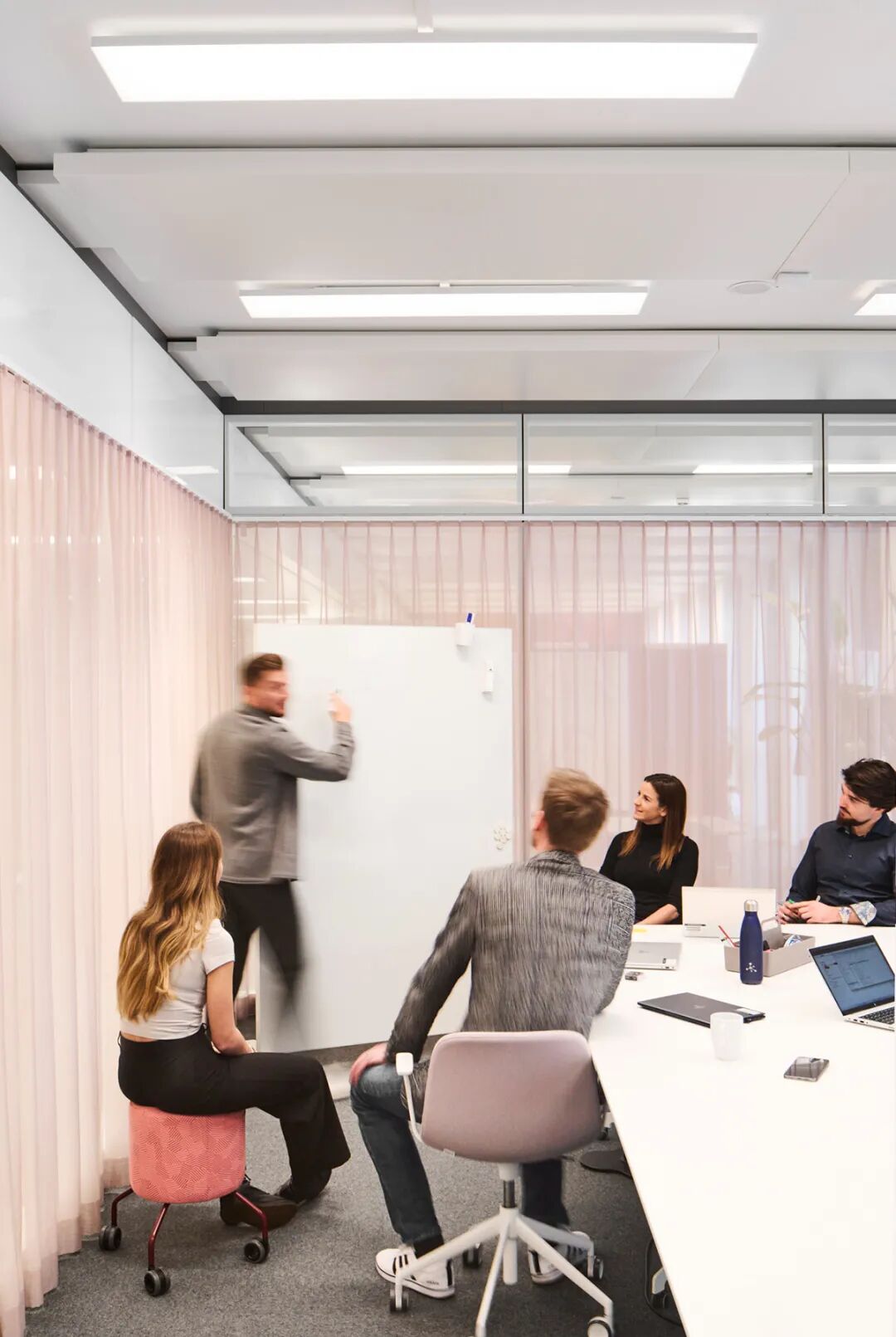
Two-person phone booth→small business class→medium-sized meeting room→large multi-function hall
-
Fully supports hybrid meetings (offline+remote), adapting to the office norm in the post-epidemic era
7. Summary of results: a future-oriented copyable template
Conclusion: The future direction of large-scale office community design
The renovation practice of the Roche Rotkruz campus has provided valuable experience for the global upgrading of the old campus .It proves:
-
Future adaptive office based on the ABW model can improve efficiency and happiness at the same time
-
Modular furniture and Standardized catalogs are key tools for realizing space flexibility and resource recycling
-
Smart office technology (induction control, intelligent lighting, acoustic optimization) is the guarantee of sustainable operation
-
Environmentally friendly and habitat-friendly is not a contradiction, but a design principle that can be deeply integrated
For companies, designers, and real estate operators, this case clearly shows: How to make old buildings carry the changes in working methods in the coming decades without tearing down and rebuilding.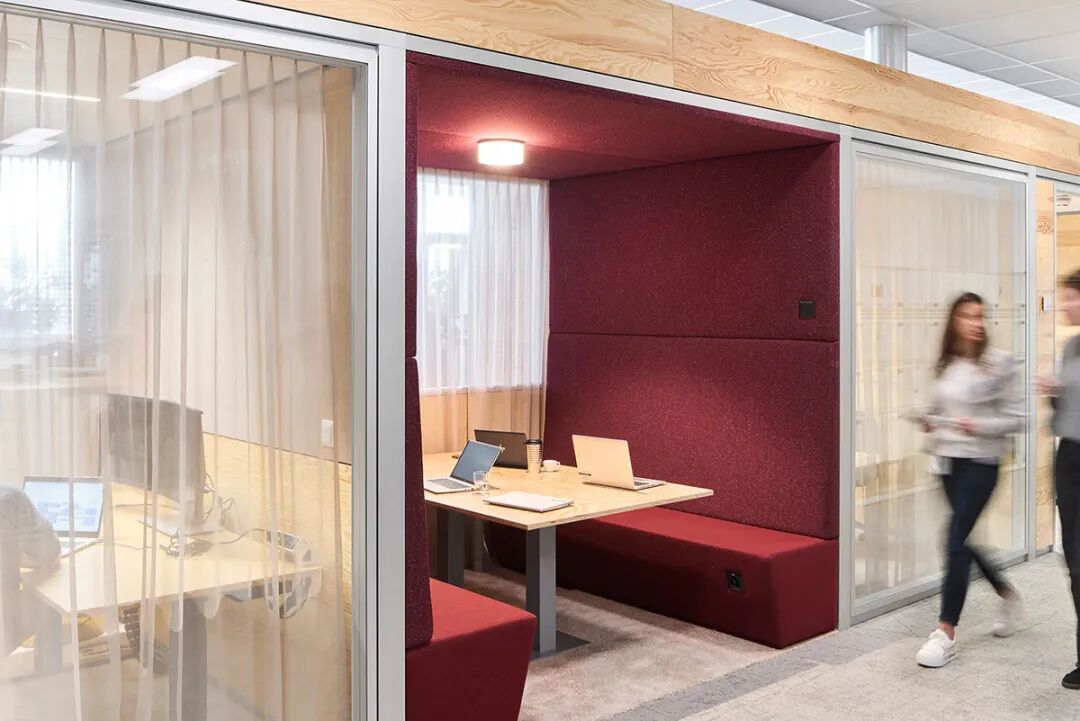
 中文
中文 English
 Français
 Español
 Русский
 العربية
 WeChat
 Douyin
 Video
Video