A 39-story vertical city, how to subvert your imagination of the financial headquarters with stairs and green plants?
When it comes to bank headquarters, what kind of picture will appear in most people’s minds?Employees in suits and suits, uniform workstations, cold glass compartments-this stereotype was completely broken at the new headquarters of National Australia Bank (NAB) in Melbourne.
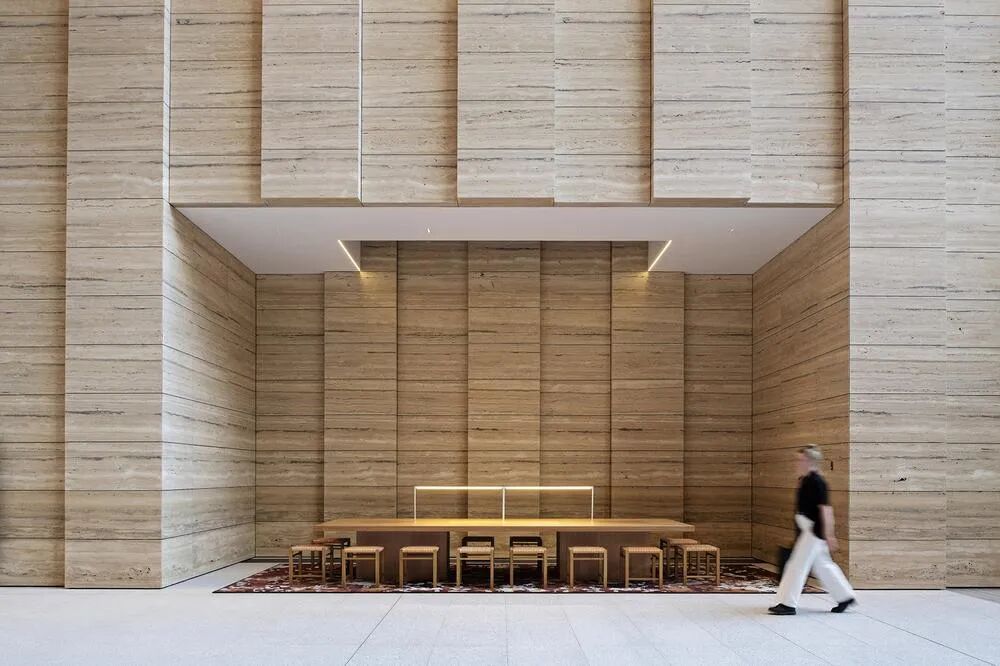
In 2022, when NAB opens its new headquarters at 395 Bourke Street, Melbourne, the industry will see not only a 65,000-square-meter office building, but also a new narrative about “connection”.The designer Hassell defined this 39-story tower as a “Magnetic Workplace”-it does not simply provide a workplace, but uses vertical greenery, connected stairs and flexible space combinations to keep people in the building and plant trust in the hearts of every visitor.
NAB is one of the four major financial institutions in Australia, with operations all over the world.However, the real reason for this century-old bank’s decision to relocate its headquarters was not a simple pursuit of larger space, but an in-depth reflection on the change in working methods .
Before the epidemic, NAB had already begun to explore a flexible work system, and the impact of global public health events has completely accelerated this transformation.”Home office is indeed suitable for focused personal work, but face-to-face collaboration, communication and innovation are still irreplaceable with physical office space in the CBD.”NAB Group technology and corporate operations executive Patrick Wright said when explaining the vision of the new headquarters.
As a result, NAB chose 395 Bourke Street, the heart of Melbourne’s central business district, a brand new tower designed by Woods Bagot and Hassell responsible for the interior design.The new site can accommodate up to 5,600 employees, bringing together teams previously dispersed in multiple offices.The open and flexible layout not only serves the “new normal” of mixed office, but also becomes a space carrier to strengthen brand cohesion.
In Hassell’s design strategy for NAB, there is a core keyword that runs through: Connection.
As a financial institution based on trust, NAB knows that the banking industry is far more complicated than the word “transaction” on the surface-it is the sum of relationships between people.Therefore, the design task book of the new headquarters clearly states: create a vertically connected team network, so that colleagues, customers and partners can naturally meet and communicate in depth here.
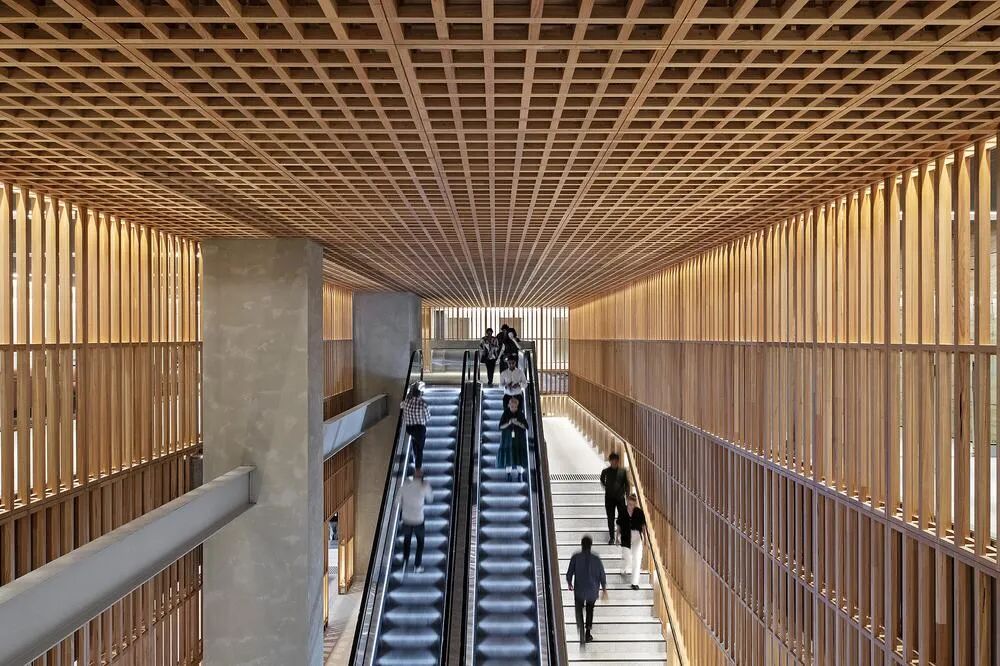
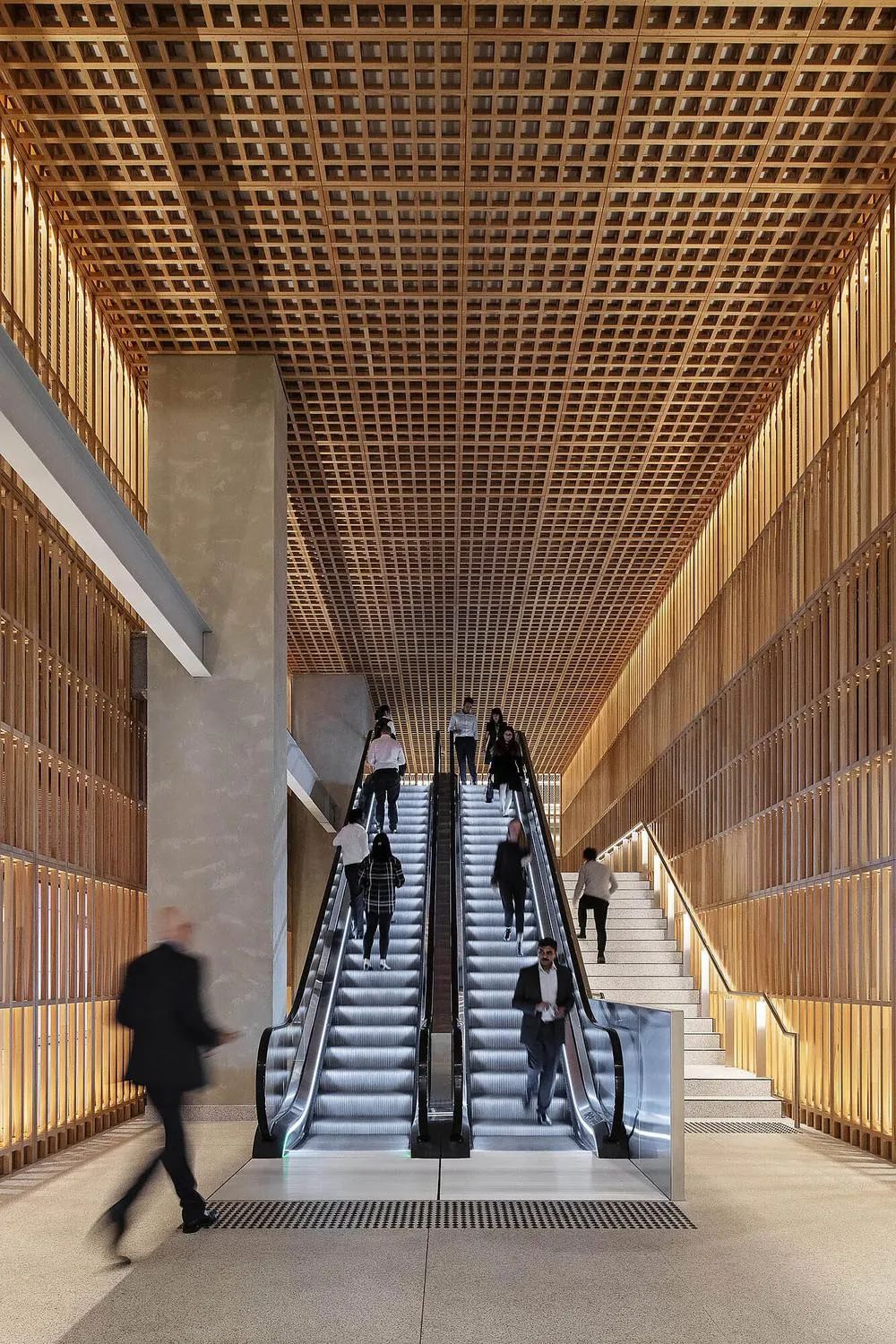
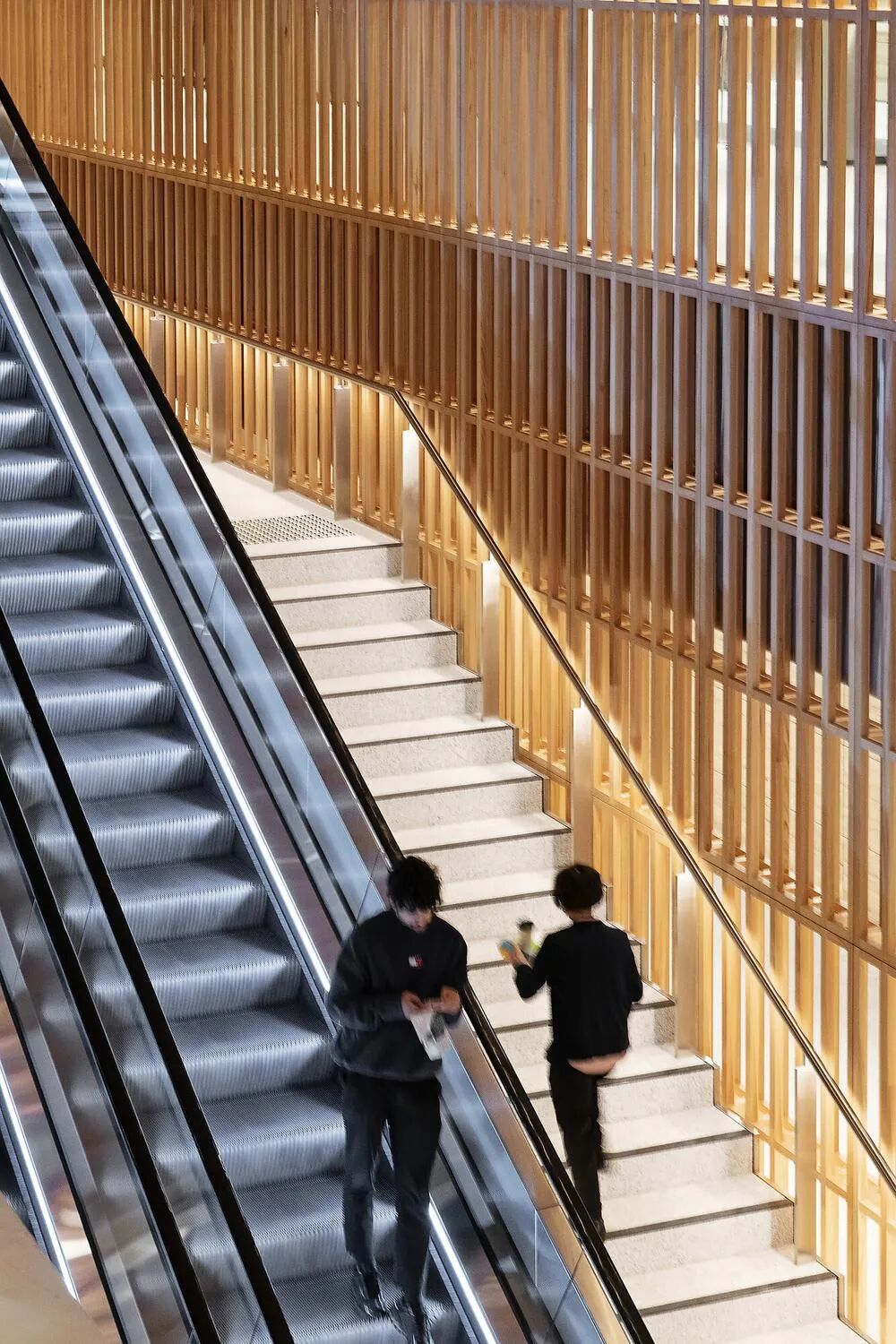
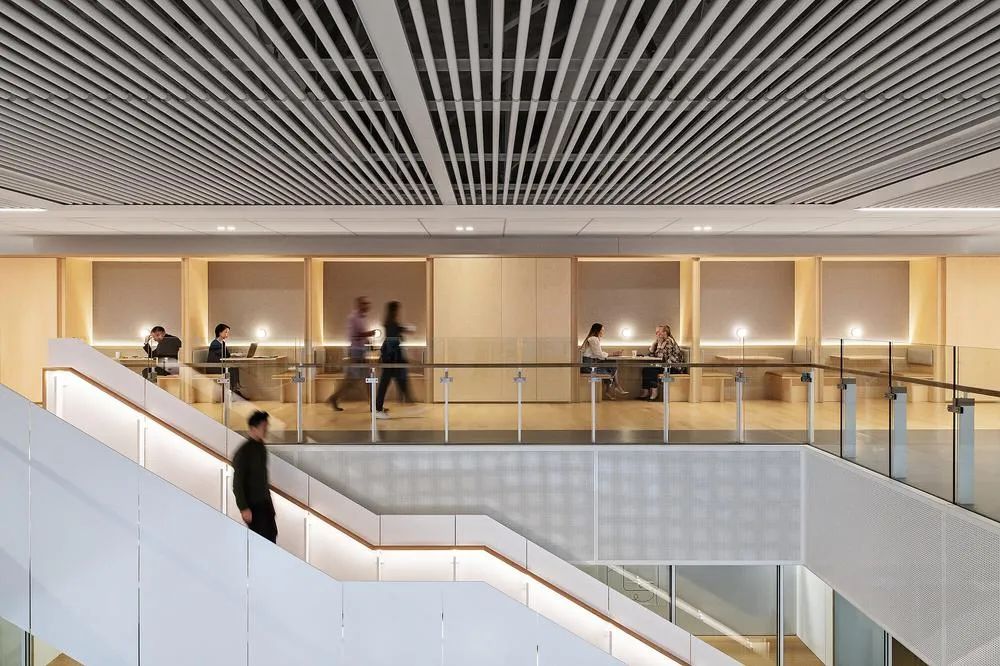
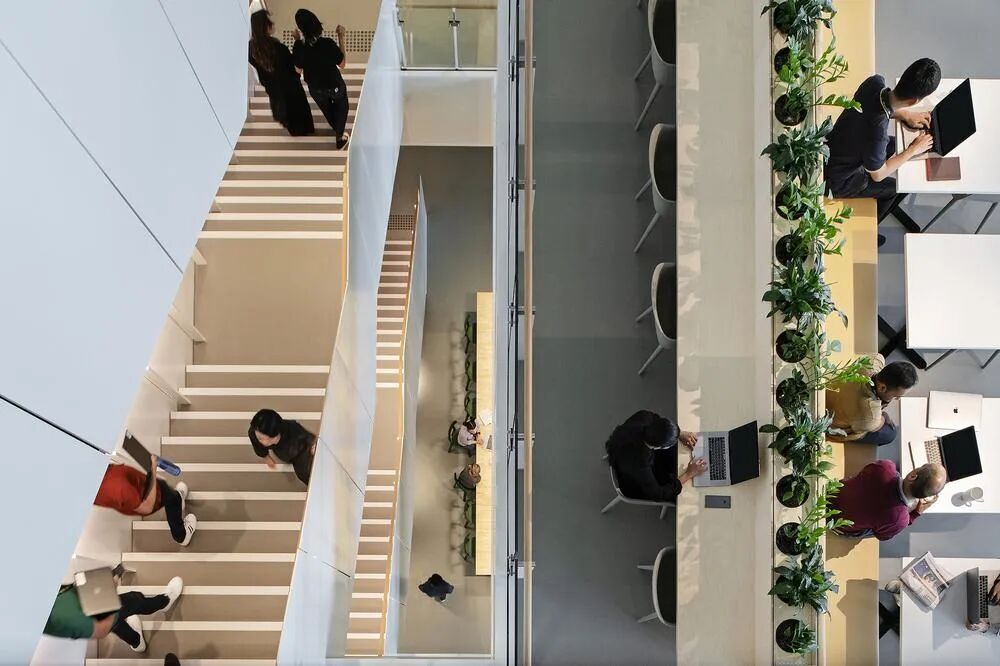
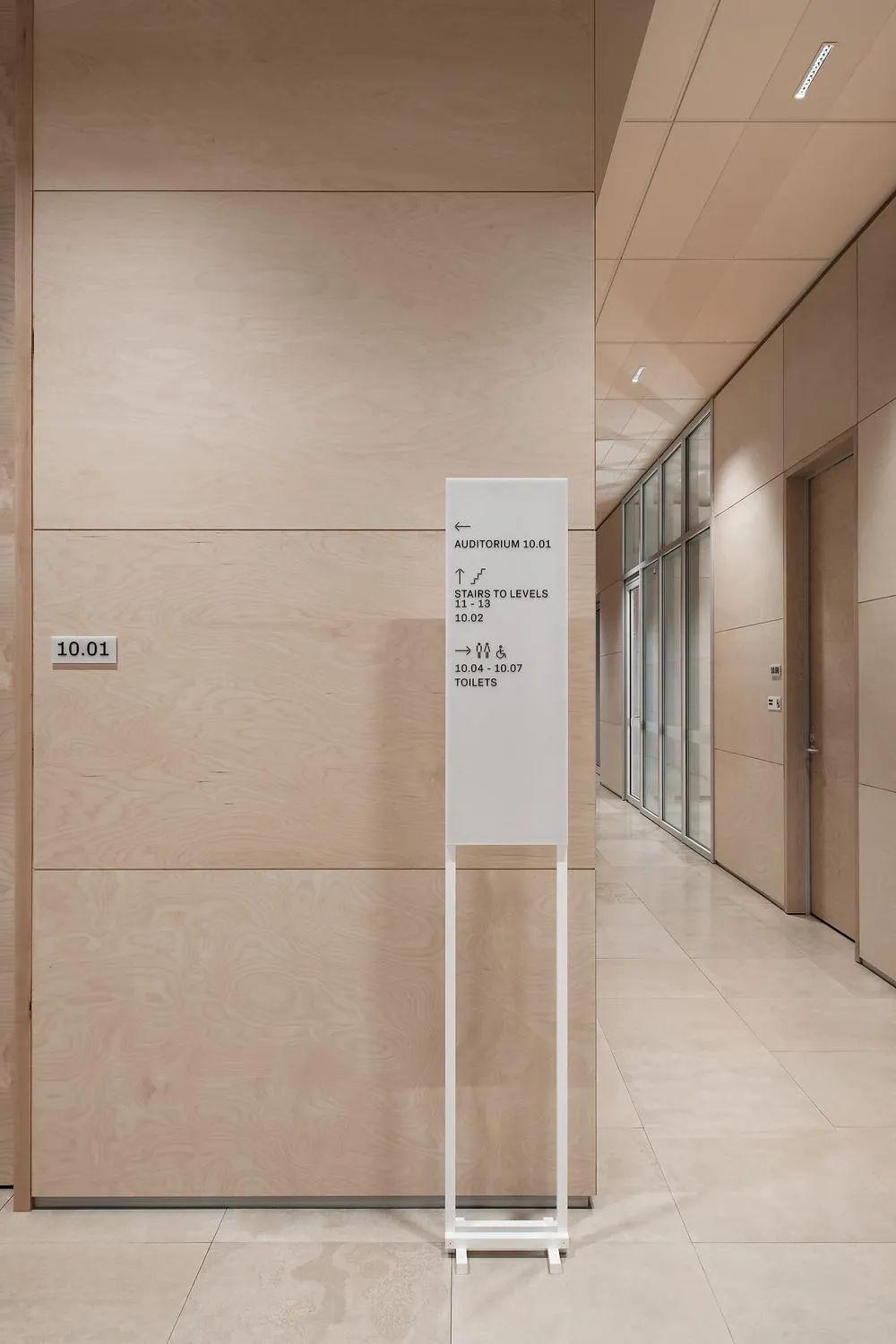
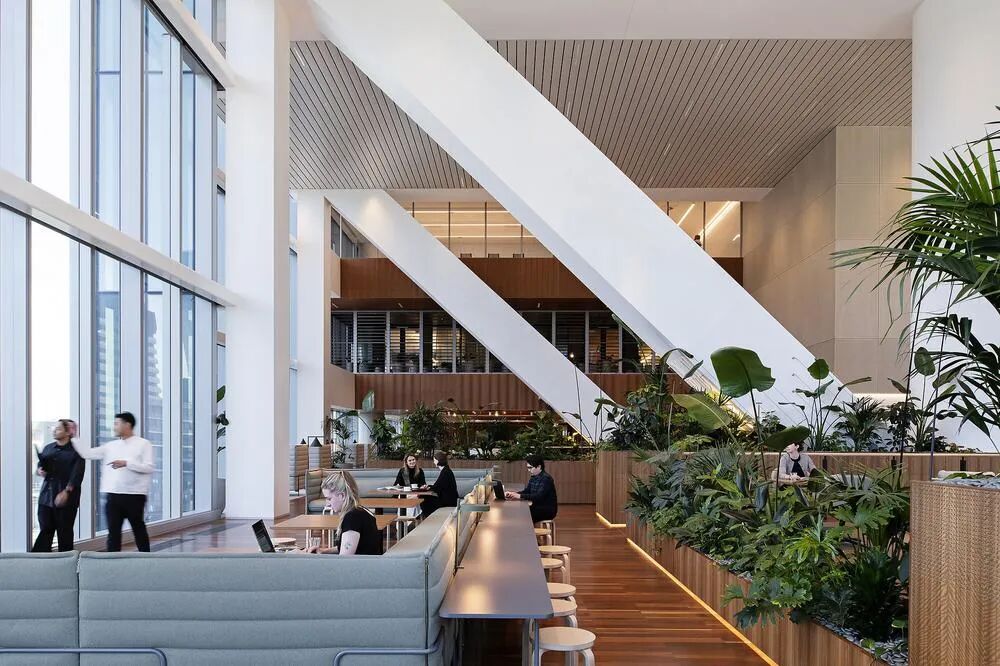
This concept is visualized as a vertical transportation system that runs through the entire building.Hassell’s designers embedded ten sets of stairs in the 39th floor, each group spans three floors , extending from the bottom floor to the top floor.Unlike the traditional bank building where elevators replace all vertical movement patterns, these stairs are deliberately designed to be spacious, bright and attractive-they encourage walking, promote chance encounters, and give employees from different departments and floors the opportunity to meet, talk, and collide ideas on the move.
“Stairs are woven into every floor, creating opportunities for interaction.”Hassell project leader Rob Backhouse described the original intention of this design.This is not only a spatial strategy, but also a cultural declaration: in today’s ubiquitous digital communication, real encounters are still irreplaceable.
If you are lucky enough to visit NAB headquarters, you will find an interesting phenomenon: people are not in a hurry to take the elevator.
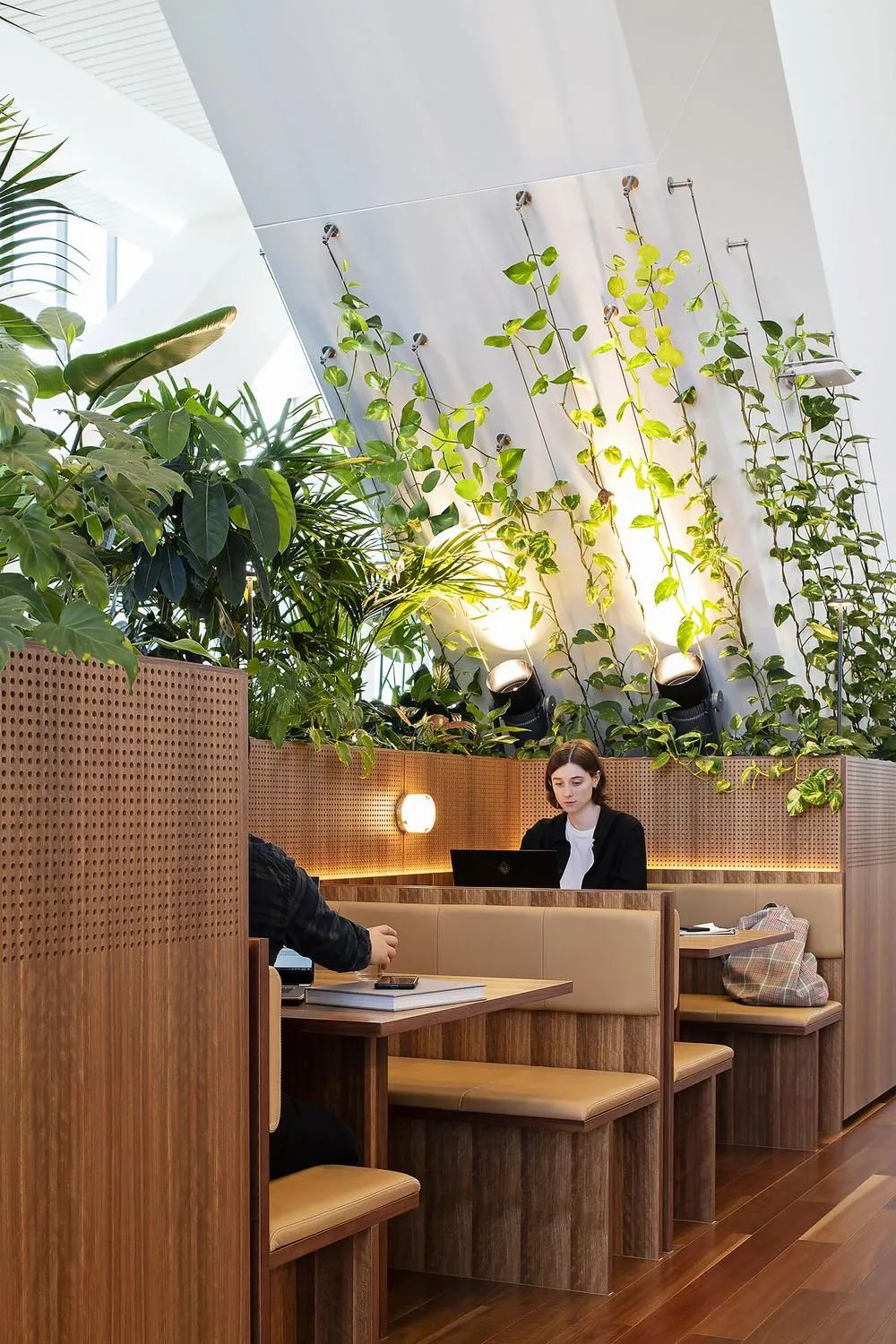
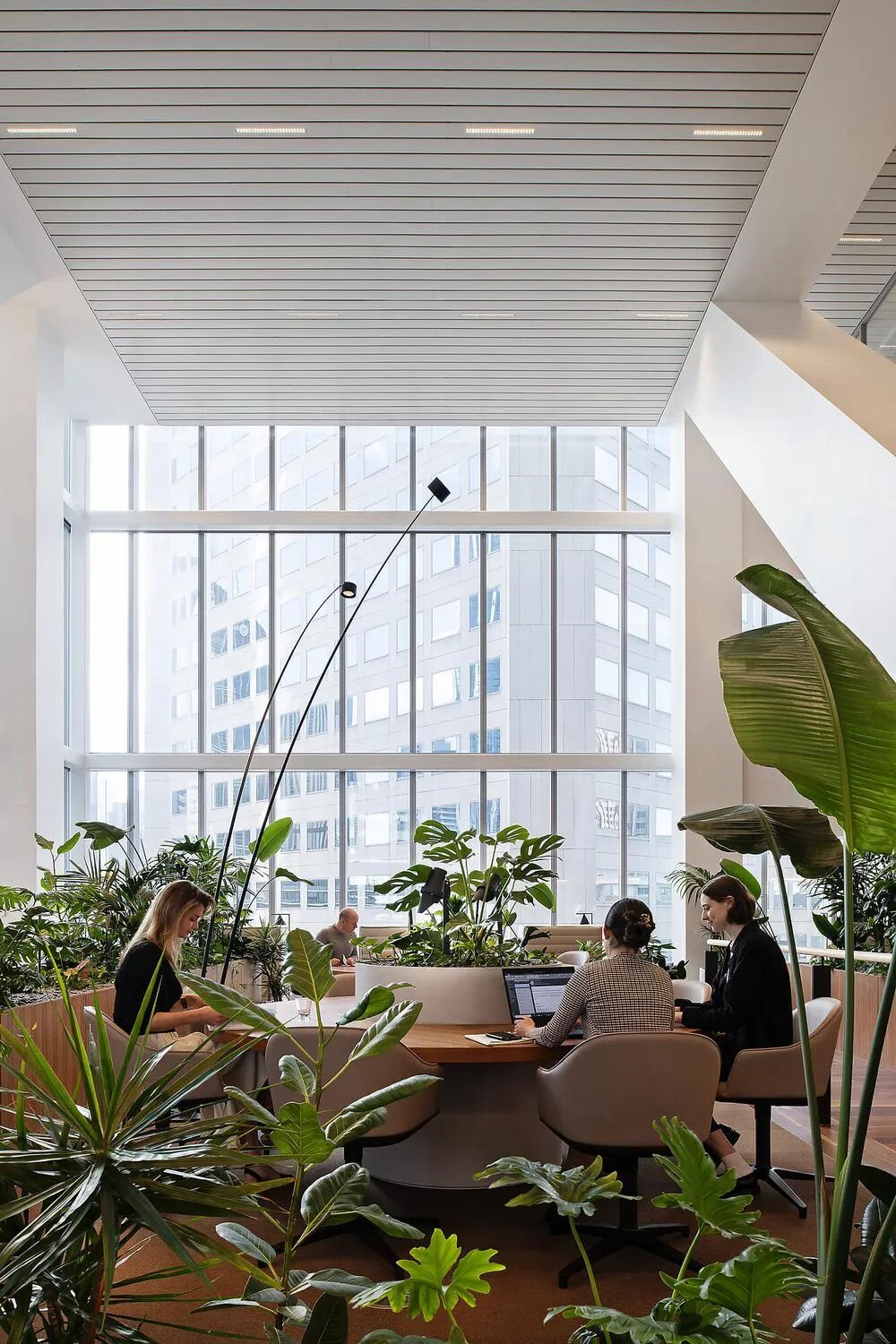
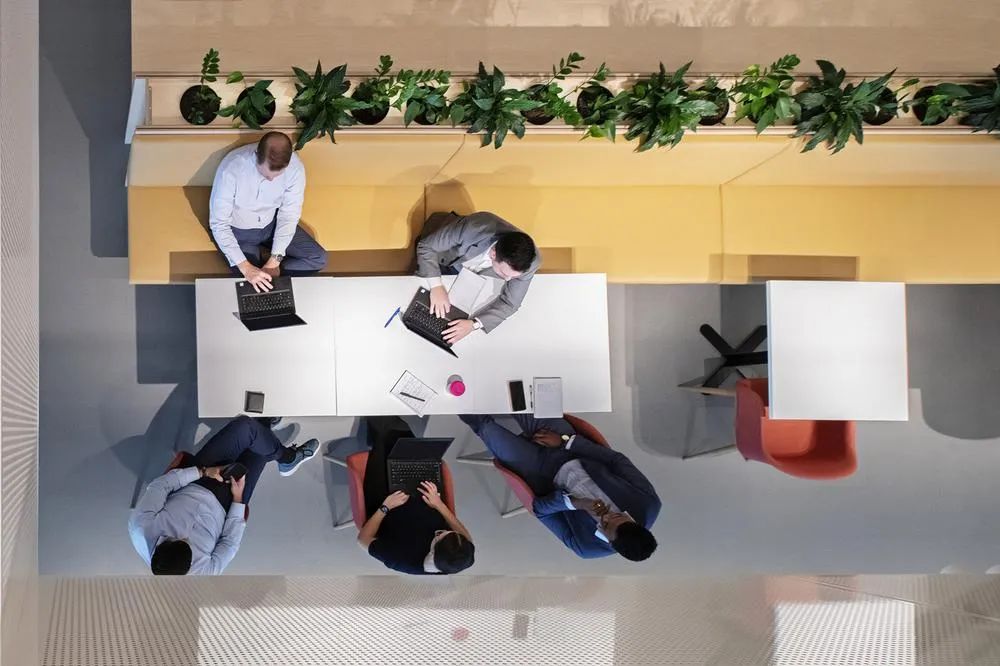
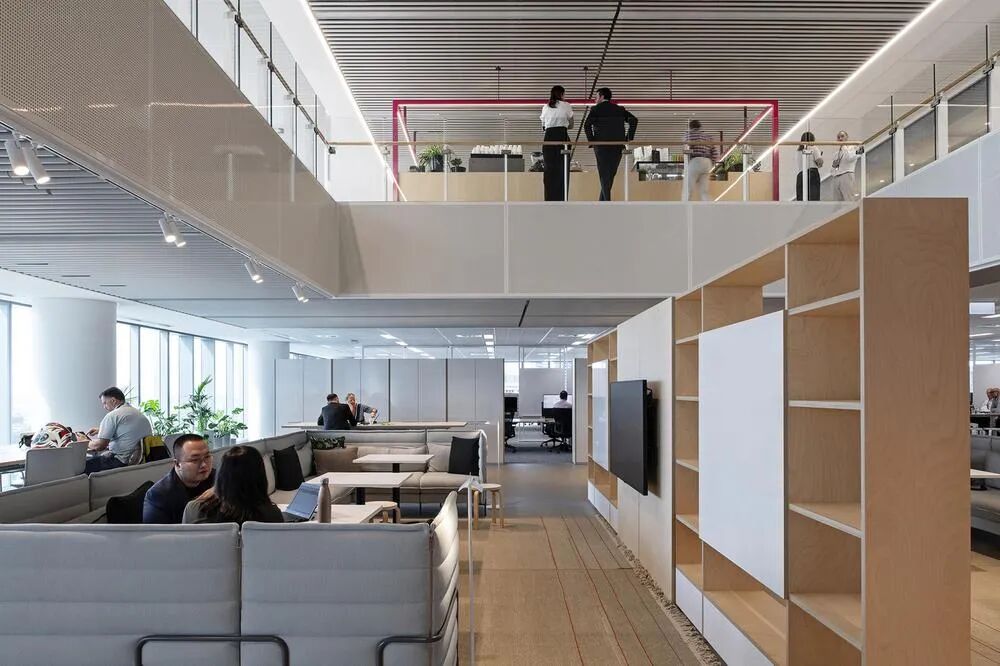
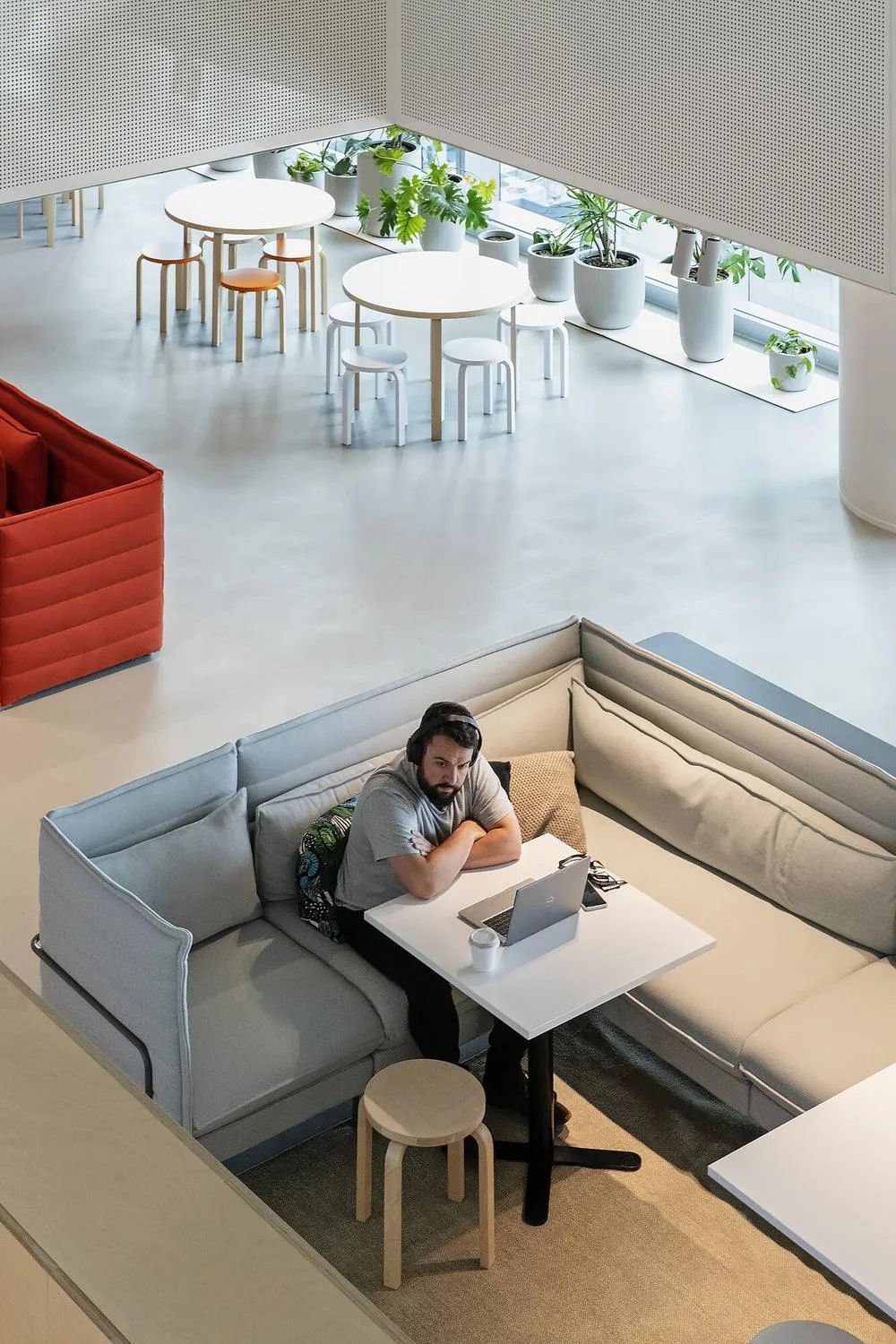
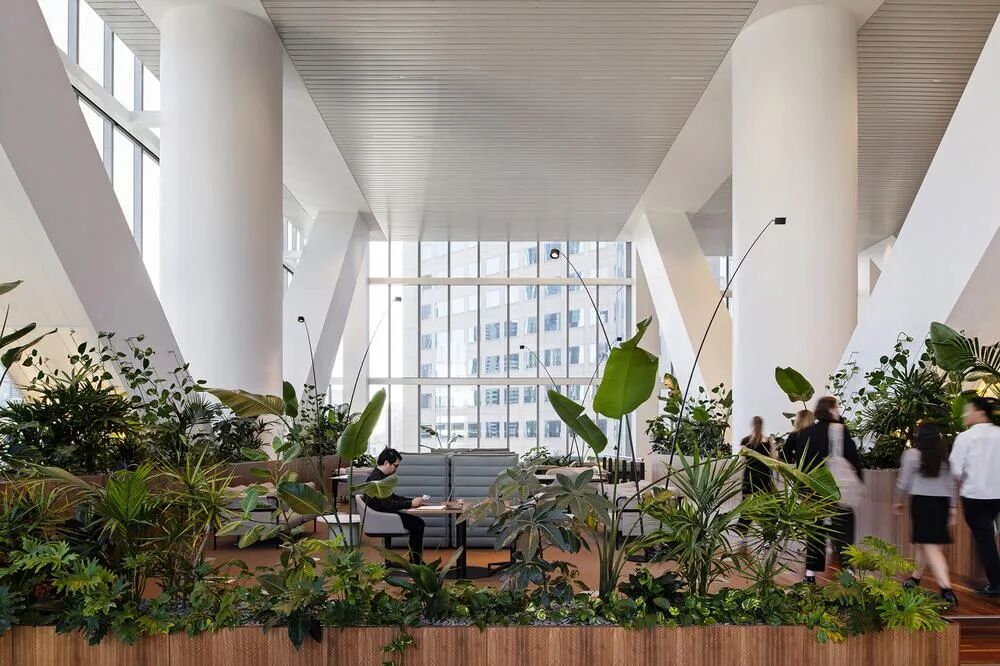
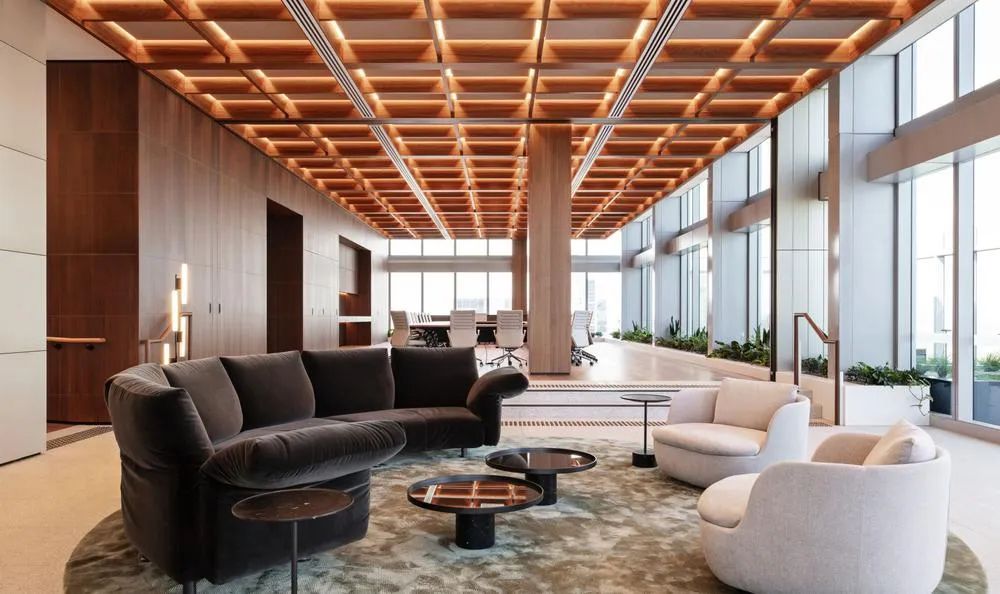
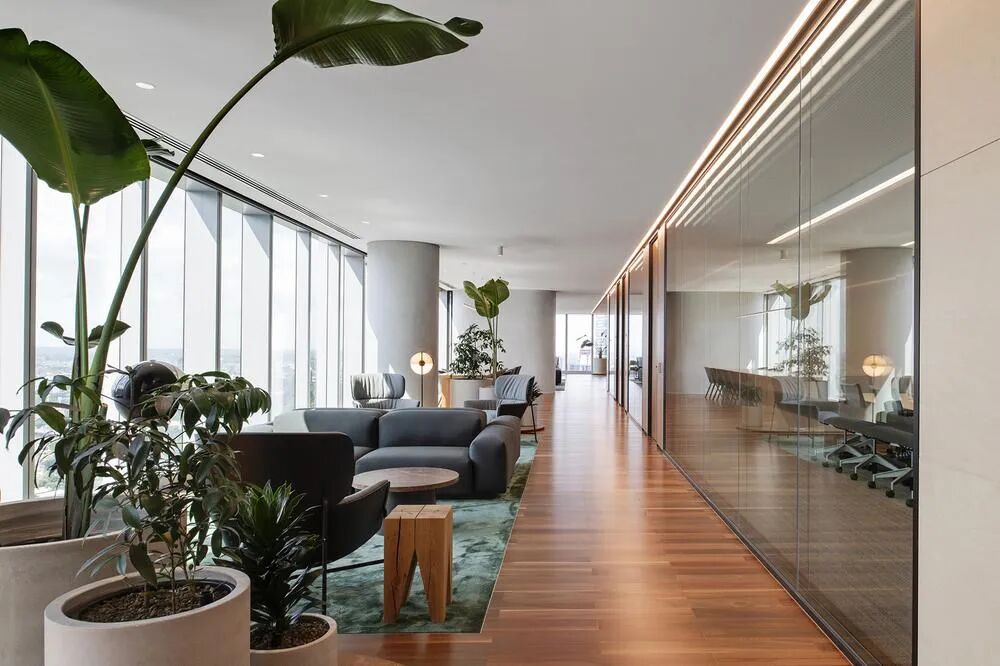
The three-story shared lounge area is the epitome of this design philosophy.Green plants surround the comfortable seating area, and changes in the height difference of the ground naturally divide the small meeting space.In this open and warm atrium, employees can invite customers to have a cup of coffee, or they can temporarily initiate a group discussion.The sense of alienation that was originally easy to produce in a large-volume space is resolved into invisibility by the well-designed greenery and seating layout- This is a delicate balance between maintaining privacy in openness and achieving intimacy in grandeur. .
The design of the stair system also follows this logic.Each staircase not only assumes the function of transportation, but also is given the attribute of “visual connection”.Through the hollow structure of the stairs, activities between different floors can be perceived-you may see the team next door discussing a project enthusiastically, or you may notice a colleague reading by the window alone.This experience of “being seen” and “seeing others” is precisely the key to breaking down departmental barriers and stimulating cross-border collaboration.
More importantly, these stairs ensure the security required for the operation of financial institutions.Under Australia’s strict building fire protection regulations, the design team realized the interconnection between floors through a complex engineering solution of 12 sets of fire-proof roller blinds and 6 fire-proof compartments, while meeting safety compliance requirements.The overcoming of technical problems ultimately serves a freer flow of space.
Another impressive element of walking into NAB headquarters is the ubiquitous green plants.
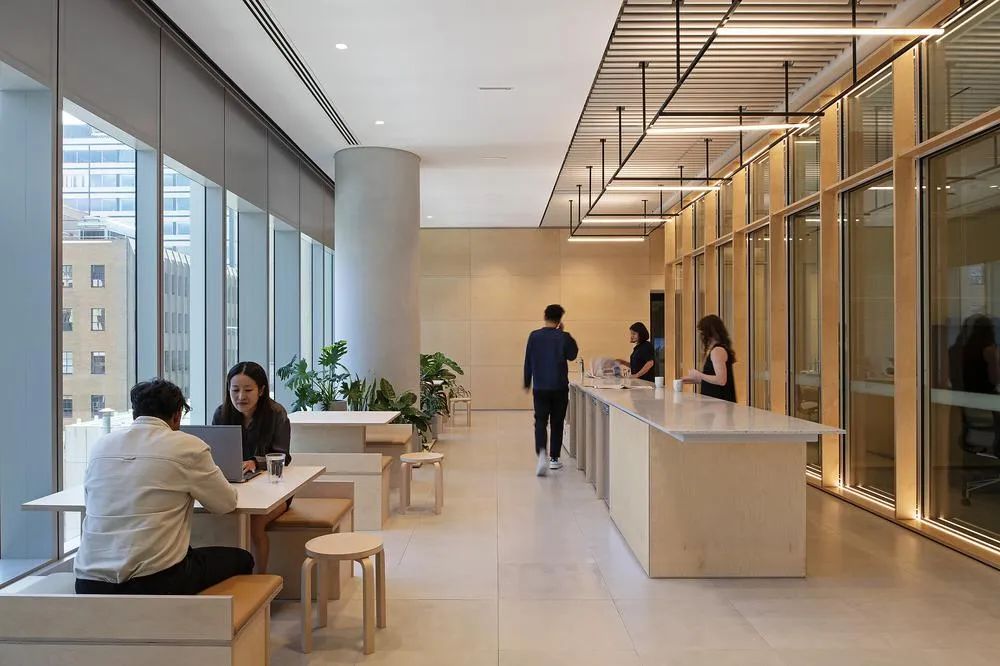
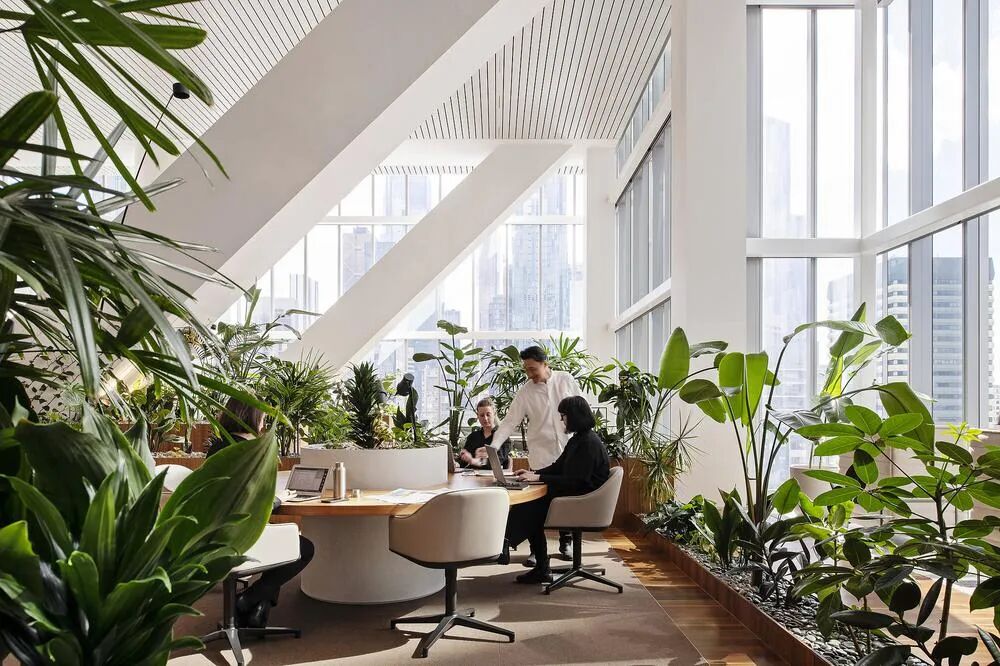
Hassell worked closely with the landscape design team to introduce more than 6,200 plants in the entire 39-story building, covering 32 different varieties.From the welcome green wall at the entrance, to the combination of potted plants on each floor, to the vertical greening of the large atrium, these plants are not only decorative, but also assume multiple functions such as noise reduction, decompression, and space definition.
In particular, it is worth mentioning that the pebbles laid in the flower pool of the building are not ordinary stone, but are reshaped from recycled computer accessories .This detail silently conveys NAB’s commitment to sustainable development.
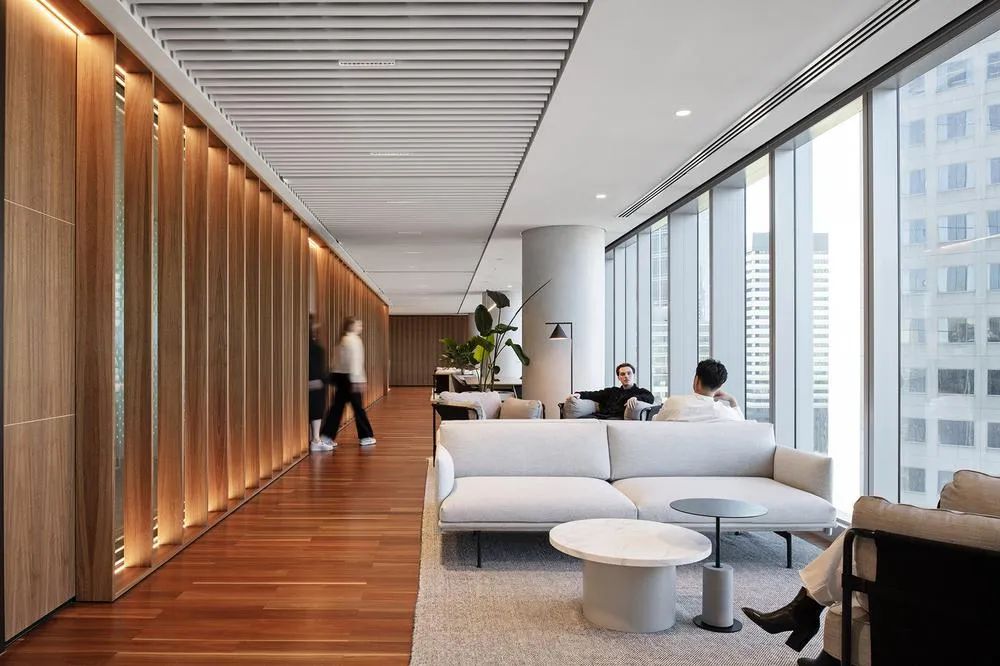
Plenty of natural lighting also runs through the entire design.By optimizing the layout of the window positions and selecting high-light-transmitting glass materials, the designer allows natural light to penetrate into the interior of the building to the greatest extent.With the black vision illuminance lighting system that meets WELL building standards, workers can maintain good circadian rhythm and physical and mental health even if they are indoors for a long time.Indoor landscape is not only visual enjoyment, but also a systematic humanistic care.
NAB headquarters’ understanding of “balance” is also reflected in its full respect for the diversity of office scenes.
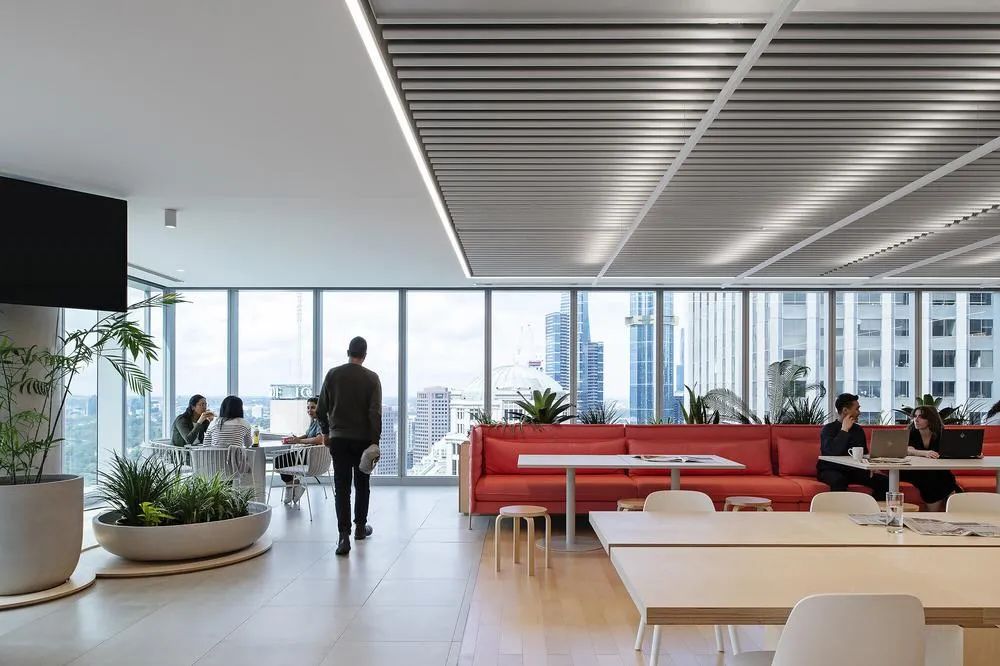
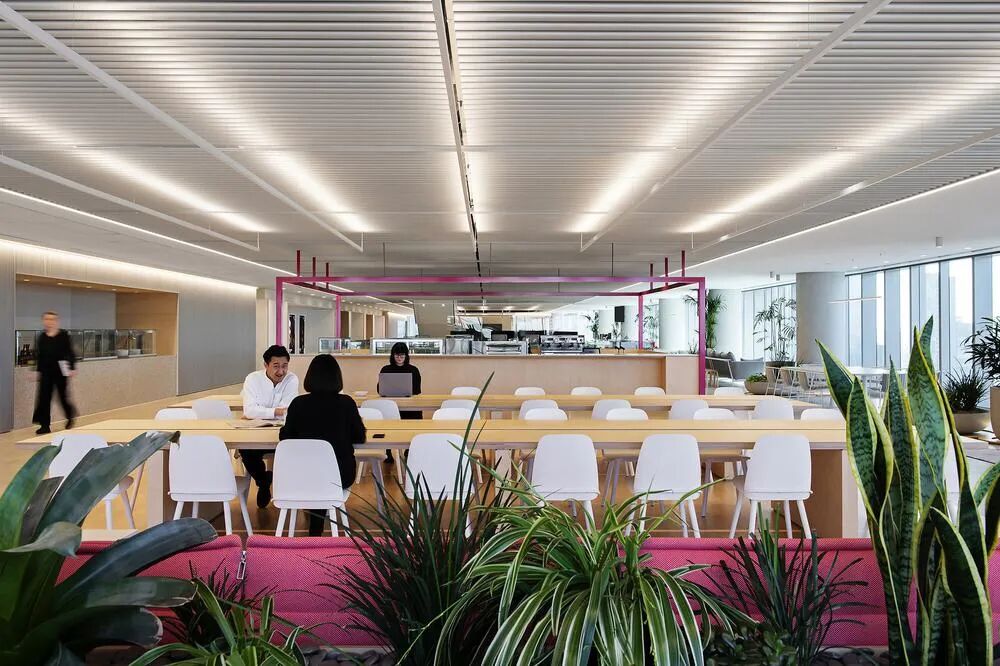
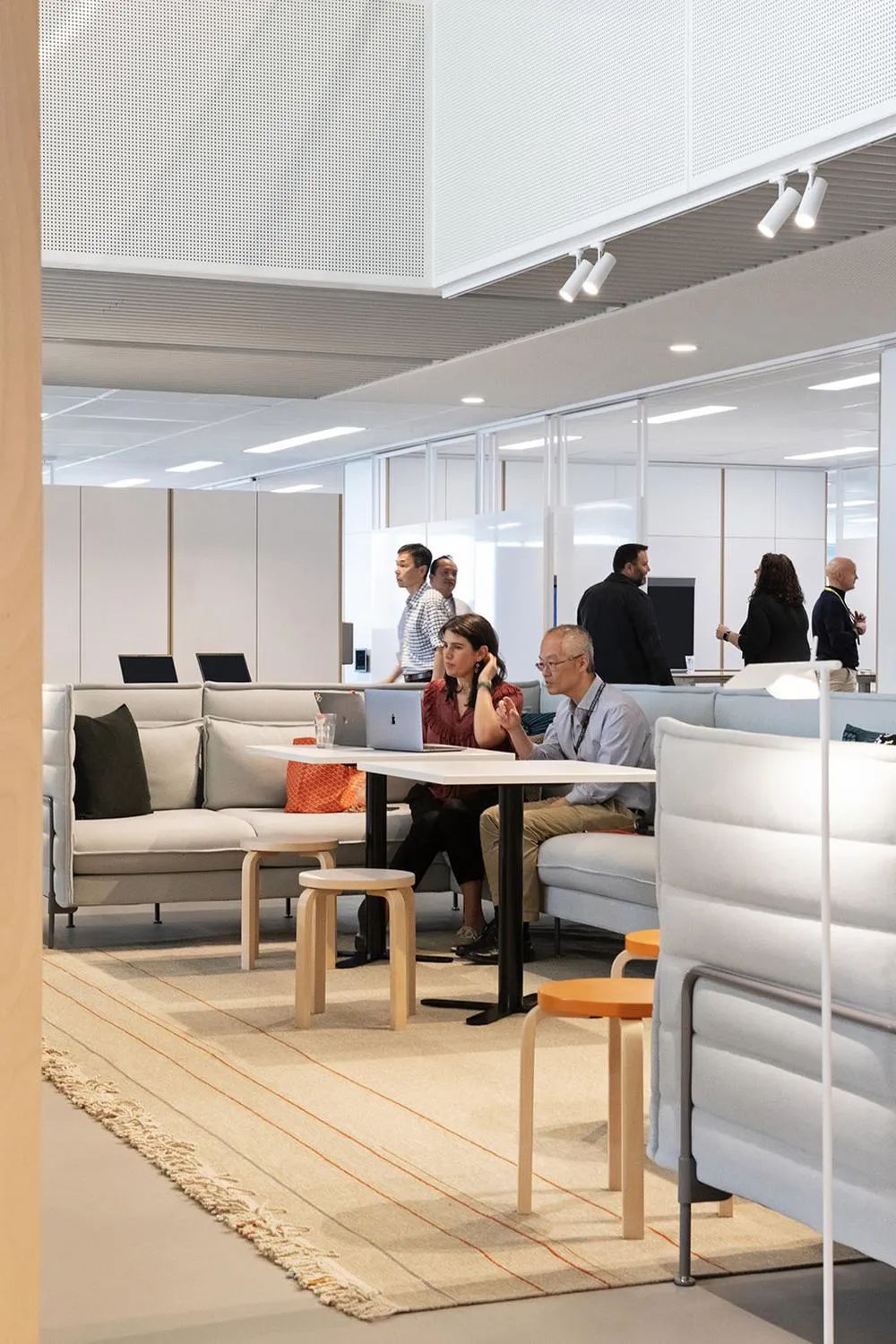
In the hybrid office mode, the daily work status of employees is dynamic and diverse-sometimes an open discussion forum for teamwork is required, sometimes a dedicated work station that isolates interference is required, and sometimes a rest corner that can be temporarily emptied and energy restored.The design of the new headquarters revolves around the premise that “it is impossible to have only one way of working”.
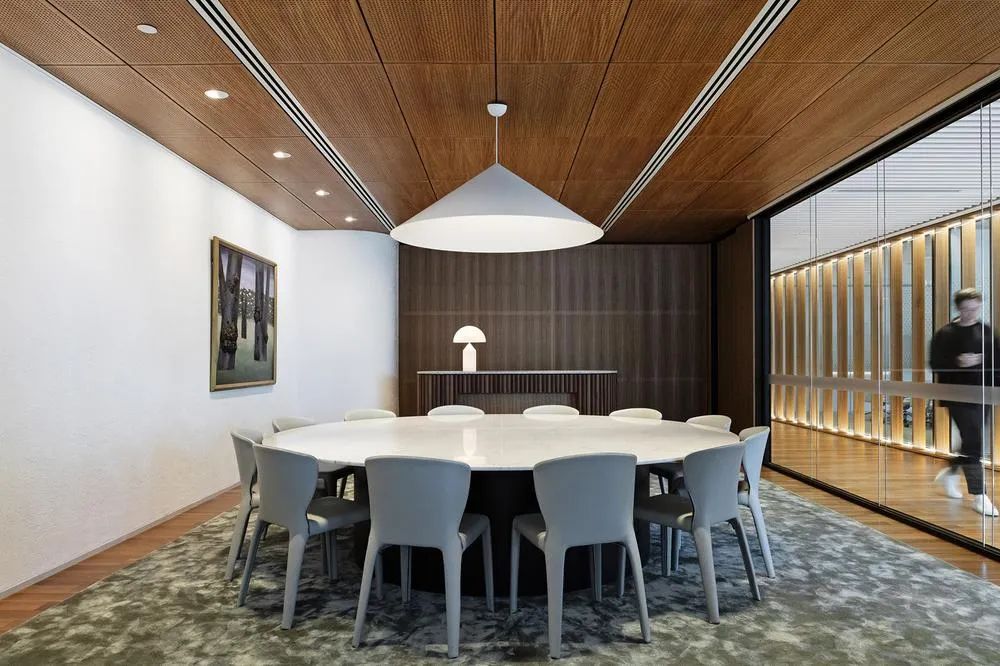
The open teamwork area encourages impromptu creative collisions; the independent quiet room (Focus Room) provides sound insulation for tasks that require deep thinking; telephone booths and small meeting rooms throughout the building meet the needs of private communication; and the entire floor is dedicated “Betterment” Health floor integrates fitness studios, meditation rooms, maternal and child rooms, multi-faith prayer rooms, and rest areas with reclining chairs-where employees can take a lunch break, meditate, or simply take a breather away from the rhythm of work.
For employees with diverse commuting methods, the building provides 644 bicycle parking spaces and perfect bathing facilities to encourage walking, running or cycling to work.Every way of arrival is seen, and every state of work is respected.
Hassell pointed out in the “Future Trends in Office Report” released in 2022: The traditional nine-to-five office culture may never return.To attract employees to return to the office space, it is necessary to provide value beyond the “work station” itself-well-designed social spaces, high-quality catering services, garden-like green plant atmosphere, and truly relaxing corners.
The design of NAB headquarters is a practical model for this concept.It is not simply to provide workstations, but to create a work destination that is “more attractive than home”.Here, people come because they want to see colleagues, because they like the atmosphere of the space, and because they find unexpected value-The office has changed from “have to go” to “want to go”.
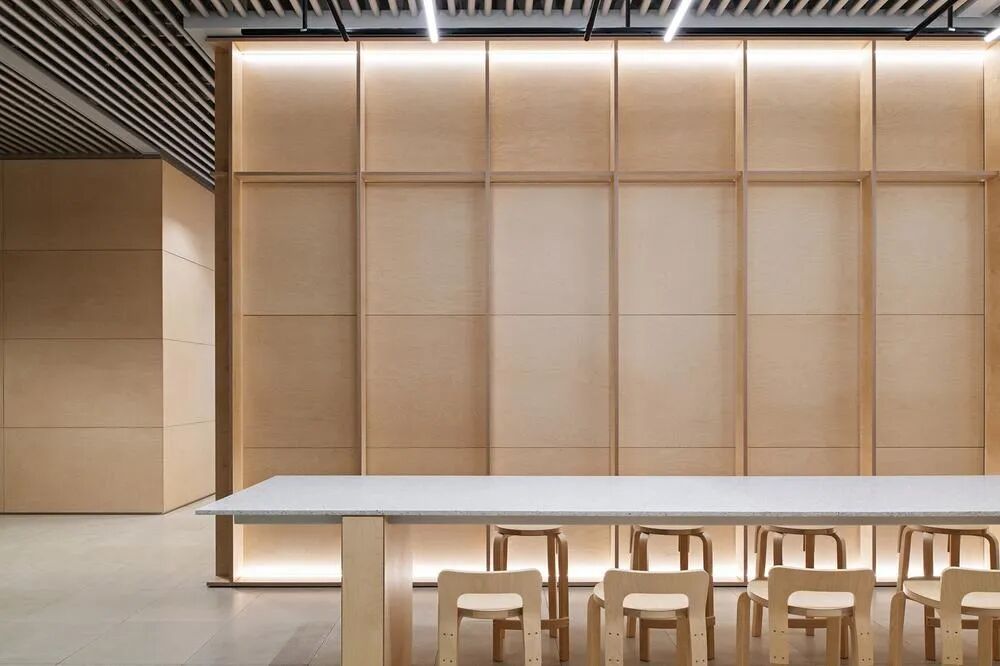
From the perspective of sustainable development, the building also handed over a satisfactory answer sheet: it obtained six-star green star rating , WELL gold certification, and Australia’s National Built Environment (NABERS) 5-star energy-saving certification.Locally sourced sustainable wood such as Mount Victoria ash and Eucalyptus patina, pebbles made from recycled computer accessories, up to 90% recycled construction waste-every detail is fulfilling its commitment to the environment.
A bank headquarters, its core product is actually trust .NAB’s new headquarters in Melbourne takes “connection” as the core of its design. It uses vertical greenery to break the physical barriers of the floors, uses series of stairs to rebuild face-to-face communication scenes, and uses diverse spaces to respond to everyone’s different work rhythm.
The signal of this “magnetic office space” to the industry is clear and powerful: The future office environment is not the upgrade and iteration of efficient machines, but the deep return of humanized value .When stairs become a social field, when green plants become productivity, and when every way of working is treated with gentleness-that is the future-oriented design that is truly people-oriented.
NAB Place Melbourne, let the connection happen naturally.
 中文
中文 English
 Français
 Español
 Русский
 العربية
 WeChat
 Douyin
 Video
Video